A Brief Guide to Christmas in Italy

Bearing in mind Italians’ reputation for flamboyance and passion, it came as quite a surprise to find that Christmas is celebrated in a relatively understated manner in Italy. It remains first and foremost a religious festival, and although it is one of the church’s cheerier ones, it is still treated with a greater degree of reverence than in UK and hence is not subject to anywhere near the same level of rampant and relentless consumerism – thankfully.

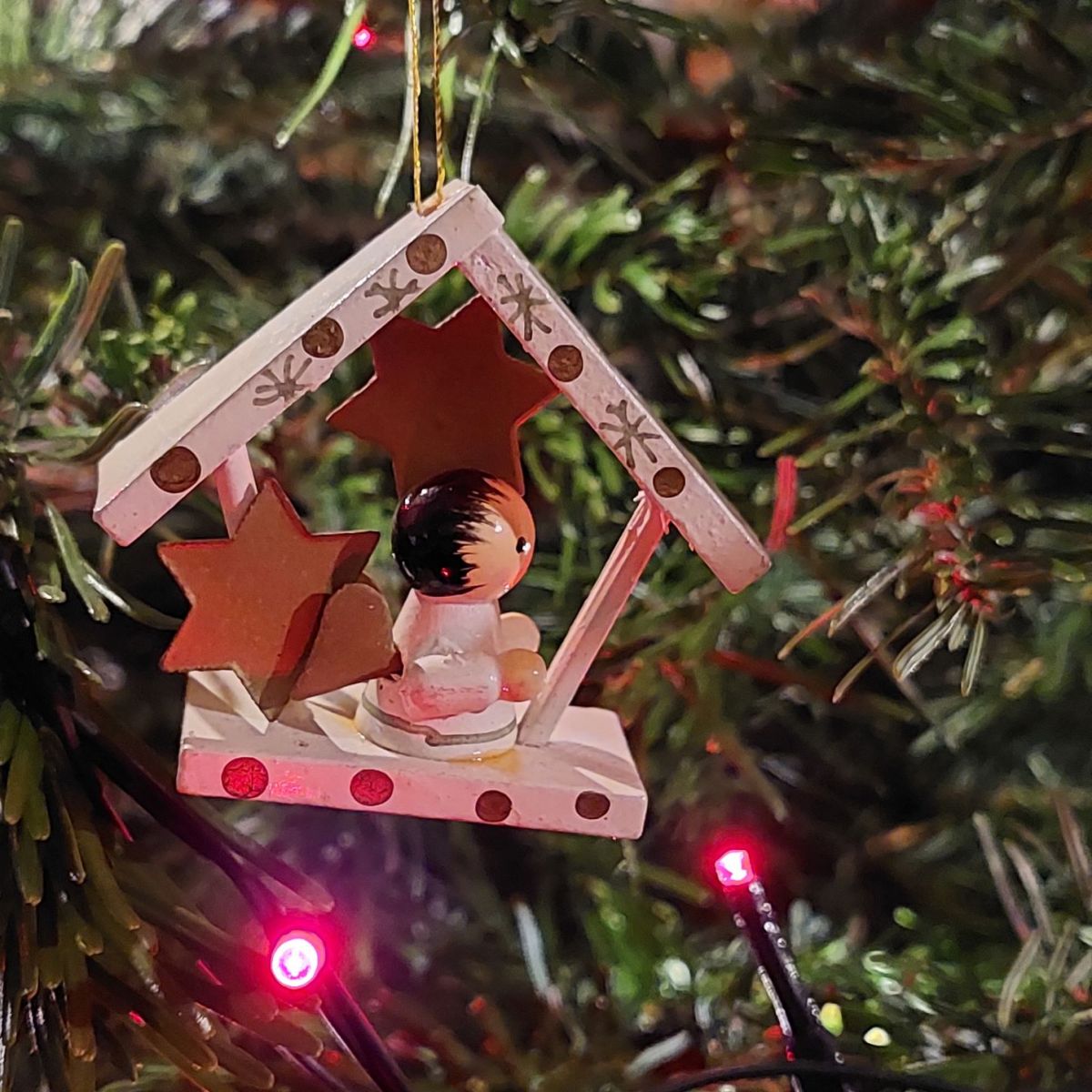
First of all, there is barely a hint of the approach of Christmas until the feast of the Immaculate Conception on 8th December, which is when most families put up their Christmas trees and decorations and when town centres turn on their Christmas lights. No giant inflatable snowmen and rooftop reindeer, though, nor any over-the-top light displays that you can practically see from outer space: it really is all very restrained and traditional. And although Father Christmas – aka Babbo Natale – plays a leading role in festivities, the star of the show is very much the baby in a manger along with the rest of the cast of the nativity. Very many families will create their own nativity scene at home as part of their Christmas decorations, and most towns and villages will have one in a central piazza; museums and galleries often put on exhibitions of historical examples, and starting from Santo Stefano (Boxing Day) many places put on a living nativity scene – presepe vivente – complete with ass if not the ox.

This relative restraint is also apparent when it comes to Christmas shopping. People exchange gifts in Italy in much the same way as in the UK and so the shops do get much busier in December, but there is certainly no ‘shop ‘til you drop’ mentality. Shops themselves don’t seem to rely on sales over the Christmas period for their very survival, and there are no over-packaged, over-priced Christmas ‘gift packs’, novelty goods and jokey stocking fillers. Christmas cards are a rarity, as are advent calendars of any kind – even the more traditional variety, never mind those filled with cheap chocolates or toys – and Christmas wrapping paper, gift tags and ribbon can take some tracking down too. But since most shops beautifully gift-wrap even the smallest purchase for you – a couple of years ago one of my purchases for Mr Blue-Shirt came extravagantly wrapped in chocolate-scented paper, for instance – this is seldom much of an issue.

This being Italy, however, what there is definitely an abundance of is food, both in the form of gifts and, more especially, of family-based feasting, which begins in earnest on Christmas Eve (La Vigilia). The centrepiece of meals served on the eve of religious festivals is fish as the idea is to have a giorno magro – literally, ‘a lean day’ – to prepare for the indulgence of the festival itself. That said, la cena della vigilia (Christmas Eve Dinner) is seldom that ‘lean’ as it often consists of several courses. If you are feeling brave (and hungry) enough you could go for the the seven-course festa dei sette pesci (feast of the seven fishes), which represent the seven sacraments. Those who relish a real challenge, though, may opt for nine courses to represent the Trinity (squared for good measure), but some may truly ‘go large’ with twelve courses to represent the disciples, or even thirteen if you include Jesus. 

There is no single, national dish that is the star of the show, though, as Italian cuisine varies so much from region to region. In Naples, for example, salt cod fritters are very popular, in Rome, a soup of broccoli, pasta and arzilla (a type of skate) is traditional, while in Calabria, it’s spaghetti with anchovies and crispy breadcrumbs, and here in Le Marche it has to be stoccafisso all’anconetana, a hearty fish stew made with stockfish (dried cod), potatoes and tomatoes.  Although we have not yet plucked up courage to attempt such an iconic dish ourselves, Mr Blue-Shirt and I do observe the fish tradition, and our previous Christmas Eve dishes have included a Ligurian fish stew, and langoustines poached in a rather moreish shellfish bisque served on homemade linguini. Our hearts weren’t quite in it last year thanks to the Christmas lockdown and so we only managed some fried sea bream in shrimp butter, but this year, homemade seafood ravioli in that yummy shellfish bisque are the most likely choice.

So after your giorno magro, it’s back to meat as the centrepiece of the Christmas Day feast.  But before that, there will probably be a selection of cured meats and cheeses just to whet the appetite, and then there will almost certainly be at least one pasta course – and possibly several. Once again, there is no single, national dish, but pasta in brodo (pasta in broth) is a pretty ubiquitous in the north, while in the south, pasta al forno (baked in the oven) tends to prevail.  When it come to the main course, roast turkey is becoming increasingly popular, but just as common are goose, pheasant, partridge and duck, or, in Le Marche at least, a large joint of porchetta – roast pork. And again, it is quite normal to have more than one meat course.  Heretical though it may seem to our Italian friends, we shall probably give the pasta course a miss, and then for our main course we are going Anglo-Italian this year. We shall be having roast turkey, but it will be accompanied by a sauce made from red wine, pancetta, olives and homegrown figs – oh, and by roast parsnips, which Mr Blue-Shirt smuggled back from the UK recently as they are practically unheard of here.

As far as dessert is concerned, although there is no equivalent of British-style Christmas pudding or mince pies here, dried fruit, nuts and spices in various combinations feature strongly. Frustingo, for instance, is a Marchigian speciality made from a deliciously rich and squidgy mix of dried figs, almonds, pine nuts, raisins, chestnuts and candied peel flavoured with coffee, chocolate, rum and mosto cotto (a syrupy reduction of the leftovers of the wine-making process – and much tastier than it sounds). Probably the only truly national favourites – and two of the very few dishes that are invariably shop-bought rather than homemade – are panettone, the large, domed, brioche-like cake studded with sultanas and citrus peel that originated in Milan, and pandoro (golden bread) the slightly denser, tall, star-shaped cake traditionally dusted with icing sugar that originated in Verona. We fall into the panettone camp, but tend to treat it as an alternative Christmas cake rather than as a dessert. Since neither of us is a big fan of English-style Christmas pudding, however, our dessert always consists of a light, chocolate sponge pudding flavoured with lots of Christmas spices and laced with brandy.

After two days of multi-course dining, you’d be forgiven for thinking that on Boxing Day (Santo Stefano) there is some respite from the feasting. But no. As in the UK, leftovers tend to feature strongly, but in the form of completely re-worked dishes rather than just cold meat with bubble and squeak. Leftover pasta, for example, is mixed with eggs and cheese to create a frittata di pasta (pasta omelette), and leftover meat is shredded and chopped and mixed into a rich tomato sauce to create a hearty stew.  However, giving the chef a break and going out for lunch is just as popular on Boxing Day. Indeed, when I went for a waistband-and-conscience-easing run along the seafront at Civitanova Marche a couple of years ago, most of the town’s beachfront restaurants had come out of hibernation especially for the festive period and every single one of them was crammed with groups of ten, twelve or more, all tucking in to steaming bowls of saffron-scented brodetto (fish stew), huge pans of silky pasta mixed with locally caught shellfish and platters piled high with crispy fritto misto (mixed fried fish). But there still won’t be any large groups (unless they are from the same household) in those beach restaurants this year, as although everything will at least be open, Le Marche is, unfortunately, about to move from the white to the yellow zone over Christmas. And while it won’t quite be business as usual, tables of up to four people will still be permitted, so at least Mr Blue-Shirt and I shouldn’t have to change our plans for Boxing Day lunch…

Buone feste – e buon appetito – a tutti!

A Green Christmas

There are three religious public holidays in Italy that do not exist in Protestant countries such as the UK. One is Epiphany on 6th January, another is the Feast of the Assumption on 15th August, and the third is on 8th December, which is the feast day of the Virgin of the Immaculate Conception. Officially, the Immaculate Conception is one of Catholicism’s four Marian dogmas (ie it was divinely revealed) and states that Mary was born free of original sin by virtue of her role as the Mother of God.  Semi-officially, however, it is also the day in Italy that signals the start of Christmas and so is the day on which people traditionally dig out their Santa hats, untangle their fairy lights and put their Christmas trees up. And although it has been another year in which celebrations and festivities have been pretty thin on the ground, the air of grim defiance that characterised the date last year has this year given way to a mood of guarded cheerfulness, with people filling their trolleys with extra-sparkly baubles, angels and stars, extra-abundant wreaths and garlands and super-size trees. It is as if there is a collective urge to celebrate how much more ‘normal’ this Christmas will feel compared to last year’s, which, with its brave faces and forced jollity, was a lonely, tense and joyless occasion.

At the start of last year’s festive season, the second – and worst – wave was at its peak (of around 40,000 new cases per day and around 800,000 cases in total). Schools were closed, leisure and entertainment venues were closed, bars and restaurants were closed in the evenings, shopping centres were closed at weekends, little movement between regions was permitted, and there was a night-time curfew in place. On top of this, the government had already warned everyone that the entire country would go back into full lockdown and that the curfew would actually tighten for almost the whole of the Christmas and New Year period – to the extent that the Pope would even have to bring forward his ‘Midnight’ Mass by a couple of hours. And, of course, the vaccine programme wasn’t even in the starting blocks.

A year on and things look and feel quite different. Yes, there has been a worrying surge in cases which currently stand at about 20,000 per day. Yes, a small number of cases of the Omicron variant have been identified here. Yes, masks in public indoor locations and on public transport remain obligatory. And yes, the state of emergency is technically still in place, along with the framework of white public, yellow, orange and red zones whereby restrictions in a given region can be tightened should conditions require it.  However, there are currently no plans for a nationwide tightening of restrictions over Christmas and New Year and (for the time being, at least) the country is pretty much open for business – as well as learning, socialising and shopping – as usual.

Well, it is for the vast majority of people – that is to say, for the 46 million or so who have participated in the country’s highly successful vaccination programme that has so far inoculated 85% of the over-12s (which equates to just shy of 78% of the total population). Over a quarter of those currently eligible have also had their third dose (Mr Blue-Shirt and me included, incidentally) and the vaccination of 5-11-year-olds is expected to start within the next few days.

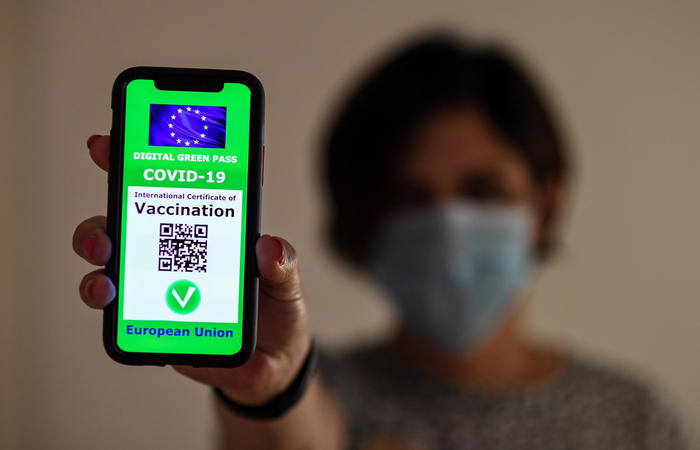
For the minority of people who have not so far been vaccinated, however, things will not be quite so easy as a result of changes to the Green Pass, the Covid passport that was introduced back in June. This is the digital or paper certificate that provides proof of full vaccination, of recovery from Covid-19 in the preceding 6 months, or of a negative test result within the preceding 48 hours (for antigen tests) or 72 hours (for molecular tests). Ostensibly at least, it was introduced to facilitate safer travel and allow entry to large scale public events, but it is clear that its primary purpose was in fact to nudge more people into getting vaccinated. And because it seemed to work, the nudge has been getting sharper ever since, first with the Green Pass becoming mandatory in all enclosed public venues such as theatres, cinemas, museums and restaurants, then in all public sector workplaces, and in mid-October it became mandatory in all private sector workplaces too.

But from 6th December to 15th January, that nudge is turning into something closer to an armlock. For a start, the list of things for which the original, ‘basic’ Green Pass is required during this period has got even longer and now includes most types of public transport. However, in a move explicitly designed to put even greater pressure on the unvaccinated to go and get their jabs, there is now also the, ‘super’ Green Pass. This is available only to those who are either fully vaccinated or who have recovered from Covid-19 – a recent negative test result doesn’t qualify – and will be required for a broad range of venues and activities for which the ‘basic’ Green Pass was originally required. Moreover, should conditions deteriorate enough to necessitate restrictions on movement within or between regions in different zones – a possibility which can no longer be regarded as merely hypothetical – they will be applicable almost exclusively to those who are not in possession of the ‘super’ Green Pass, that is, principally to those who are unvaccinated.

As well as pulling out all the stops to get as many people as possible vaccinated, the policy is, it appears, also aimed at avoiding the ire of the vast majority who understandably feel they have earned the freedoms getting vaccinated was supposed to ensure, and who therefore equally understandably feel they should not have to forego those freedoms in order to protect the small minority from the possible consequences of their own continued inaction. And it appears to be working: while there has been a degree of grumbling about the complexity of the new measures as well as questions about their enforceability, there has been little real opposition and even fewer actual protests. Added to which, the vaccination rate has soared back up to around half a million jabs per day, and boosters are now available to everyone whose second jab was over five months ago.

So as Mr Blue-Shirt and I are among the nearly 46 million people who will be able to enjoy the rewards for having ‘done our bit’ for the collective good, we were also among those filling their trolleys with extra-sparkly baubles, angels and stars, extra-abundant wreaths and garlands and super-size trees, determined to indulge in a lot more Christmas cheer than last year – even if we do have to show our Super Green Passes to do so. And even if that cheer turns out to be short-lived.

All Aboard the Covid Rollercoaster

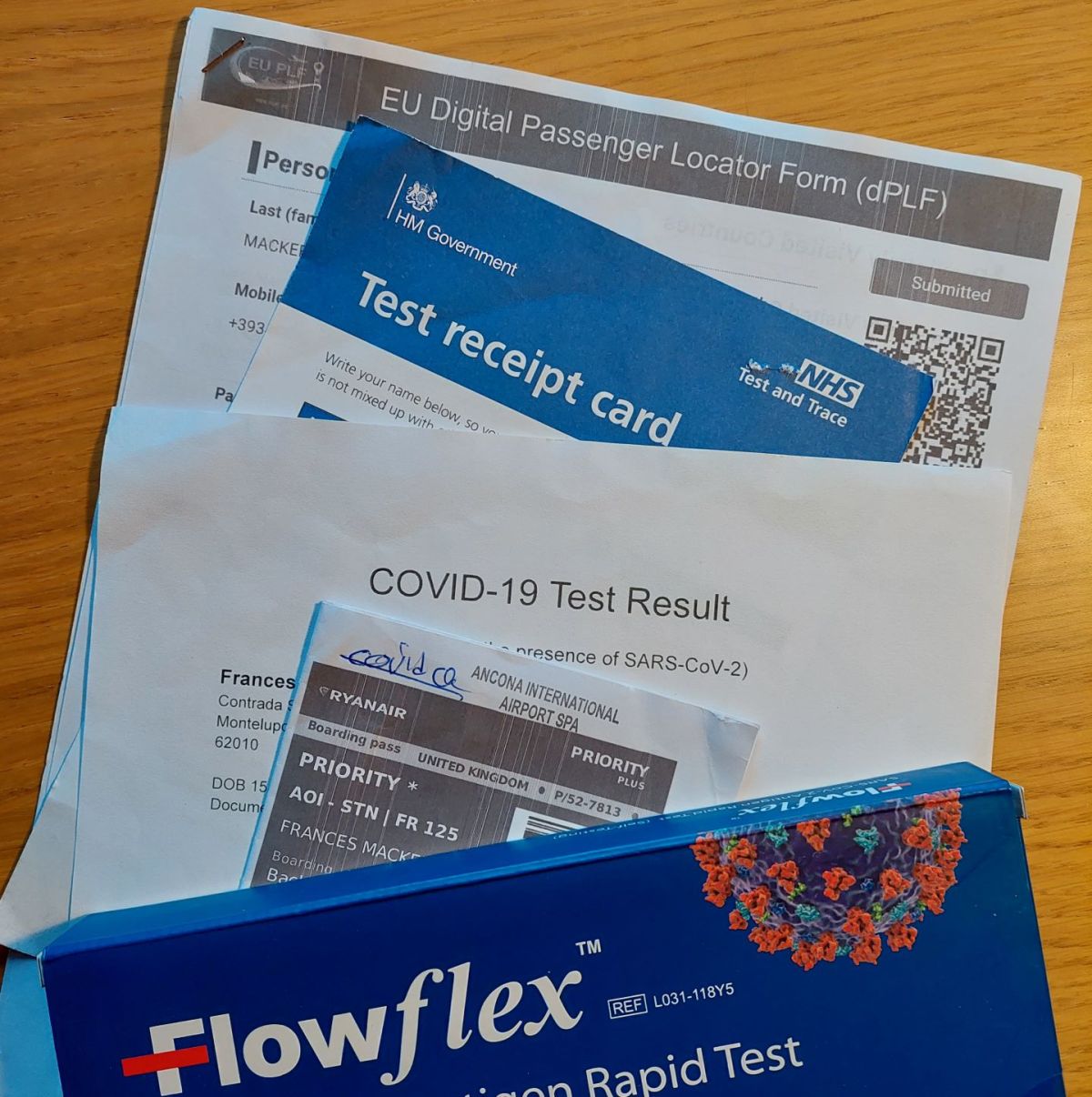
We had finally relaxed and were now properly enjoying our first chance to visit family and friends in the UK in two years. And although we had so far only made two of our six scheduled stops, it was already abundantly clear that being able to re-connect with some of the most important people in our lives after so long was, without a shadow of a doubt, worth every second of the pre-travel stress from all the Covid-related form-filling and test-booking on top of remembering how to make all the other arrangements for our trip.

Once we had successfully uploaded the negative results of our obligatory Day 2 lateral flow tests while sitting in my brother-in-law’s cosy farmhouse kitchen, the worry-bots finally shut down and allowed us to enjoy the simple pleasure of sharing the company of those we hold most dear. And by the time we set off a couple of days later from our 2nd port of call where I had enjoyed an extra-special birthday with two of our closest friends, the pleasure of re-connection had given way to an delicious sense of well-being.

We had not long started our two-hundred-mile drive to Devon for our next round of visits and were winding through unfamiliar suburbs toward the motorway south when our phones pinged almost simultaneously: incoming emails. As I reached into my handbag, they both pinged again, this time for incoming text messages. I nervously opened the text, somehow already certain of its contents. And sure enough: NHS Test and Trace has identified you as a contact of someone who has recently tested positive for Covid-19… I felt sick.

I was still reading the message when Mr Blue-Shirt’s phone rang.
….unless you are exempt….
It was the ringtone that meant only one thing: the burglar alarm had gone off at home. We looked at each other in disbelief. It is over two years since we were burgled, but the alarm going off still always sends us into a tailspin.
Mr Blue-Shirt fumbled for his phone, continuing to steer with his knees.
My phone joined in with the same ringtone.
“At the roundabout, take the second exit towards the M1.”
I punched the ‘accept call’ button.
“Alarm alert – control panel – check battery. Alarm alert – control panel – check battery.”
“Check battery?? What the ….?!”
Mr Blue-Shirt gave up on his phone and prodded at the hands-free controls on the steering wheel.
“And in today’s Woman’s Hour phone-in, we’ll be talking about….”
…. your NHS Test and Trace account…
Mr Blue-shirt finally found the ‘answer call’ button.
“Alarm alert – control panel – battery low. Alarm alert…”
… you should book a PCR test…
“I think the power must be out at home…”
“But before that, my special guest in the studio this morning is …..”
“After 200 metres, turn left, then immediately move …”
My head was about to explode.
“Pull over!”

Mr Blue-Shirt swung into a lay-by and switched off the engine. As our heart rates gradually slowed, we tried to gather our thoughts.
“We don’t have the NHS app so it must have been our passenger locator forms,” said Mr Blue-Shirt eventually.
“It’s small comfort right now, but at least it shows they do actually work, I suppose. But what if one of us has got it? God knows what we do then. Our whole trip would be gone for a start. After all this time and all this effort, if…!” My voice caught in my throat.
“We won’t have it, though – will we,” said Mr Blue-Shirt firmly. “We did lateral flow tests at Phil’s and they were both negative, plus we’re both double-vaxxed.”
I took a deep breath and forced myself to think logically. “Yes, you’re right. Plus everyone was masked at the airport and throughout the flight. So the chances we’ve caught it are actually really low, aren’t they… Let’s do another lateral flow test now, though – just for our own peace of mind.”
“Good idea. I think we ought to book PCR tests too.”
“Definitely, but lateral flows first, eh?”
“Yes, and I’ll try and sort out the alarm while we wait for the results.”
I rummaged in our bags for the test kits we had had the forethought to order at the same time as our Day 2 tests, and as we sat in the front of the car with the vials and swabs balanced on our laps, we carefully went through all the steps, placed the slim white cassettes on the dashboard – and crossed our fingers.

With our tests doing their thing, Mr Blue-Shirt called the friend who we had given the spare keys to and asked if he could go and check the house and find out why the power was off, and I finally read the email and text properly. Slowly, our tension eased a little. It turned out that several days of heavy rain and high winds at home had caused lots of power cuts, and so it was this that had almost certainly triggered the alarm system alert rather than any intruders. Just as encouragingly, I realised that we shouldn’t need to self-isolate as we were both fully vaccinated – provided neither of us was positive, of course. We glanced apprehensively at our test cassettes. A single red line had appeared in the result slot of each of them: negative. We both exhaled deeply. That was something, at least. But we still had to get the power and alarm back on and book our PCR tests, which we decided to do in the relative comfort of a service station coffee shop rather than at the roadside.

A few miles later, we pulled into the first motorway services we came to, grabbed lour laptops from the boot and settled ourselves in a secluded corner of Starbucks with a much-needed cup of strong tea. An intense hour or so followed as I worked through the laborious process of booking our PCR tests while Mr Blue-Shirt focused on getting the power and alarm back on. But finally, we flopped back in our chairs and pushed our empty mugs to one side: we were there. Mr Blue-Shirt had successfully talked Antonio through finding the fuse box, getting the power back on and the alarm re-set, and I had got two PCR tests booked at the drive-in centre just outside Exeter at eight o’clock the following morning. Now we just had to re-schedule all our Exeter visits and warn everyone what had happened, for although we were both double-vaxxed, were completely symptomless and had done two negative lateral flow tests, the fact that we had been identified as contacts of someone who had tested positive had re-booted the worry-bots and so we felt we should avoid seeing anyone – my wonderful 90-year-old aunt and her lovely 94-year-old husband in particular – until we had formal confirmation that we were in the clear.

Waiting for our results holed up in our bland but functional budget hotel room was excruciating and our earlier sense of well-being soon became just a distant memory. With every ping and bleep we both leapt for our phones, desperate for the news that would release us from the agony of uncertainty and allow us to do what we had been looking forward to for so long. Then 30 nerve-wracking hours after our swabs had been taken, the messages we had been longing for dropped into our inboxes: Your coronavirus PCR test (or other lab test) is negative…

It wasn’t until I finally embraced my precious aunt’s fragile frame that the relief really hit me and tears spilled down my face onto her shoulder. Eventually I stood back and held her delicate hands in mine, and that delicious sense of well-being and re-connection came flooding back as I looked into those familiar, twinkling grey eyes.
“This Covid thing’s a bugger, isn’t it,” she said.

‘The day that changed Ancona forever’

It felt as if we had had travelled forward through nearly twenty centuries in barely twenty metres. We had just finished exploring as best we could Ancona’s semi-excavated Roman amphitheatre, but heading back down the hill towards the city centre my eye was caught by a small commemorative plaque high on a section of blank, imposing brick wall with a pair of securely padlocked arched wooden gates set into it. It looked like the buttress of an ancient fort but turned out to be part of a 19th century prison that had been used as an air raid shelter during WW2, and the plaque was in remembrance of those who died there in an allied bombing raid in November 1943. Beneath the plaque was a poster: to mark the anniversary of the raid the shelter was going to be opened for a couple of days of guided tours. The very next day I called the number on the poster to book our places.

A week later, on a wet and windy Sunday morning, we made our way up through maze of streets on the slopes of Monte Guasco that rears up to the south of the city centre, our shoulders hunched against the driving rain blowing in off the grey and restless sea. When we reached the gates that were now flung wide revealing a long, broad tunnel, we were surprised on such a dismal day to see so many people milling around after their visit or waiting for the next one to begin. Having had our booking and our Covid Passes checked, we were directed across the road to a small patch of bare land where a guide was just about to start our tour. As he tried to stop the wind tugging his slightly soggy notes from his hand, he began his talk with some historical context.

From the start of the war until autumn 1943, Ancona had never come under attack, notwithstanding its strategic location, as it lay beyond the range of both UK and US bombers. All that changed, though, as soon as German forces occupied Ancona barely two weeks after Italy signed the armistice with the allied powers on 3rd September 1943, and the Allies’ advance into southern Italy also brought the city into bombing range. However, through either complacency or naivety, the city had built only small numbers of shelters after war had been declared, and planned to rely on little more than peals of church bells to warn inhabitants of imminent aerial attack. Not only did the city appear to think its lack of fascist fervour and its centuries-long tolerance of the Jews would make it less of a target, it seemed unaware of its strategic significance, despite its major port and its position on a major north-south rail line. And even after US 12th Air Force rained down bombs on the railway marshalling yard (as well as many other parts of the city) a month after the occupation began, air-raid warning systems and shelters remained staggeringly inadequate; it was as if with this key target now disabled, the powers that be thought that further attacks would be unlikely.

Our guide ushered us back across the road, through the tall wooden gates and into the chilly gloom beyond. He explained that this grave misconception was shattered only a fortnight later when at just after midday on 1st November some 50 American B-25 Mitchell bombers approached the city from the Adriatic Sea. In two waves, one at 12.16 pm, the other at 12.55 pm, they unleashed a ferocious air attack on the port and shipyard that lay no more than 500 metres down the hill from the prison. Many of the bombs missed their target, however, and four of them hit the L-shaped tunnel in which we were now standing. It had been built between 1940 and 1942 by the prisoners themselves so they and the prison staff, along with local civilians and children from neighbouring schools and an orphanage could find shelter from any air strikes. The structure was no match for 250-to-500-pound cluster bombs, though: one hit the prison entrance, which had originally been located on the still bare piece of land where our tour had begun, two more collapsed the roof of the middle section, trapping all those inside within the rubble, and a fourth hit the school immediately behind the tunnel, cutting off the only remaining escape route and rendering any rescue effort all but impossible. In just 40 devastating minutes, 724 people lost their lives, many of them children.

We tried to take in the tragedy of these numbers as we stood in the musty half-light of the tunnel whose now-restored walls still seemed to echo with the cries of those who had perished there. In sombre silence we pondered the exhibition of grainy black and white images showing the extent of the damage the raid had wrought that lined the walls of the end section of the tunnel. After some minutes, we slowly made our way back along the tunnel and out into the grey November light, and above the wind we heard a nearby church clock strike one o’clock. I can’t think I was the only person it made shiver.

In the aftermath of this horror, all but 4,000 of the city’s 80,000 inhabitants fled the city, which at least meant that there were few casualties in the raids that continued into early 1944 – more than 130 in total. However, by the time Ancona was liberated by the Polish 2nd Corps just eight months later in July 1944, more than two-thirds of the pre-war city lay in ruins, including nearly all its Renaissance-era buildings around the harbour, and over 30,000 of its citizens were left homeless. It took until the start of the 1960s for the city to restore some degree of normality. And we could still see the scars left by those months of bombardments as we made our way back down the hill through the hotchpotch of utilitarian, post-war apartment blocks slotted in between tired but elegant neo-classical palazzi that still characterises the centre of this gritty, resilient and fascinating city today.

Discovering Hidden Treasures

So, if the likes of Rome and Florence, awash with jaw-dropping architectural and artistic treasures, are akin to a top-end antiques shop, then I would say that Ancona (40 minutes up the road from us and Le Marche’s capital) is probably more akin to a sprawling and slightly shabby collectables emporium. The glamourous antiques shop is filled with artfully displayed period furniture, glass-fronted cabinets full of delicate porcelain and crystal, and artworks with ostentatious gilt frames hang from the tastefully painted walls; every which way you look, your eye falls upon one beautifully lit artefact after another. The untidy collectables emporium, by contrast, is crammed to the roof with every conceivable variety of knick-knack and bric-a-brac. Stacks of second-hand books lean lazily on dusty shelves, one-eyed dolls sit propped up against floral table lamps with wonky, faded shades, and you have to squeeze through a forest of mis-matched, cobweb-draped dining chairs to reach some interesting-looking glassware almost hidden in a distant, dingy corner.

A brief canter through Ancona’s two thousand years of tempestuous history, however, will explain why the city has had neither the time, the resources, nor the energy to dust the bookcases, polish the crystal or tidy the furniture. This resilient, gritty and strategically important seaport on the Adriatic coast was founded in the 4th century BC by the Greeks to facilitate maritime trade in the eastern Mediterranean. About 400 years after the Greeks came the Romans, for whom the port also provided a valuable military bridgehead to the imperial outpost of Dalmatia just across the Adriatic. In the 7th and 8th centuries the Goths, Lombards and Saracens came and went, leaving a trail of death and destruction in their wake. In the succeeding centuries, it managed to keep the forces of the Holy Roman Empire at bay, sent its ships to the Crusades and later threw its lot in with the Guelphs. As a consequence, it was absorbed into the Papal States in the 15th century, and during the Renaissance enjoyed its heyday as a prosperous centre for trade and banking. In the 18th century it was held under siege by the Turks, Russians, Austrians and the French, and in the 19th century, the city made a major military contribution to the Risorgimento which resulted in the final defeat of the Papal States and the unification of Italy in 1861. The city was bombed by the navy of the Austro-Hungarian empire in WW1 and again by the Allied Forces in WW2 as part their operations to liberate the city from Nazi occupation. Oh, and in the post-war period Ancona has also suffered two major earthquakes and a deadly landslide. And yet, for all the chaos, this unpromising-looking emporium somehow draws you in; there is an energy to all the jumble, a human drama behind every battered piece, and you soon find yourself happily rummaging around among the clutter. Then suddenly you stumble across a real treasure that first piques your curiosity then demands your attention.

Take the other week, for instance. We went for a poke about in the maze of streets on the slopes of Monte Guasco that rears up to the south of the city centre and on the very top of which stands the Romanesque Cathedral of San Ciriaco.  Looking out over the Adriatic on the site of the city’s ancient Greek acropolis, this relatively modest church built from local white stone dates back to the 10th century but has been extended, altered and rebuilt many times since. We had always sensed, though, that in such a prominent location right above the harbour, there must be more layers of history in the area than just the cathedral. And as we wandered up the hill among the hotchpotch of squat, post-war apartment blocks jostling against slightly down-at-heel neo-classical palazzi, we did indeed come across a real treasure.

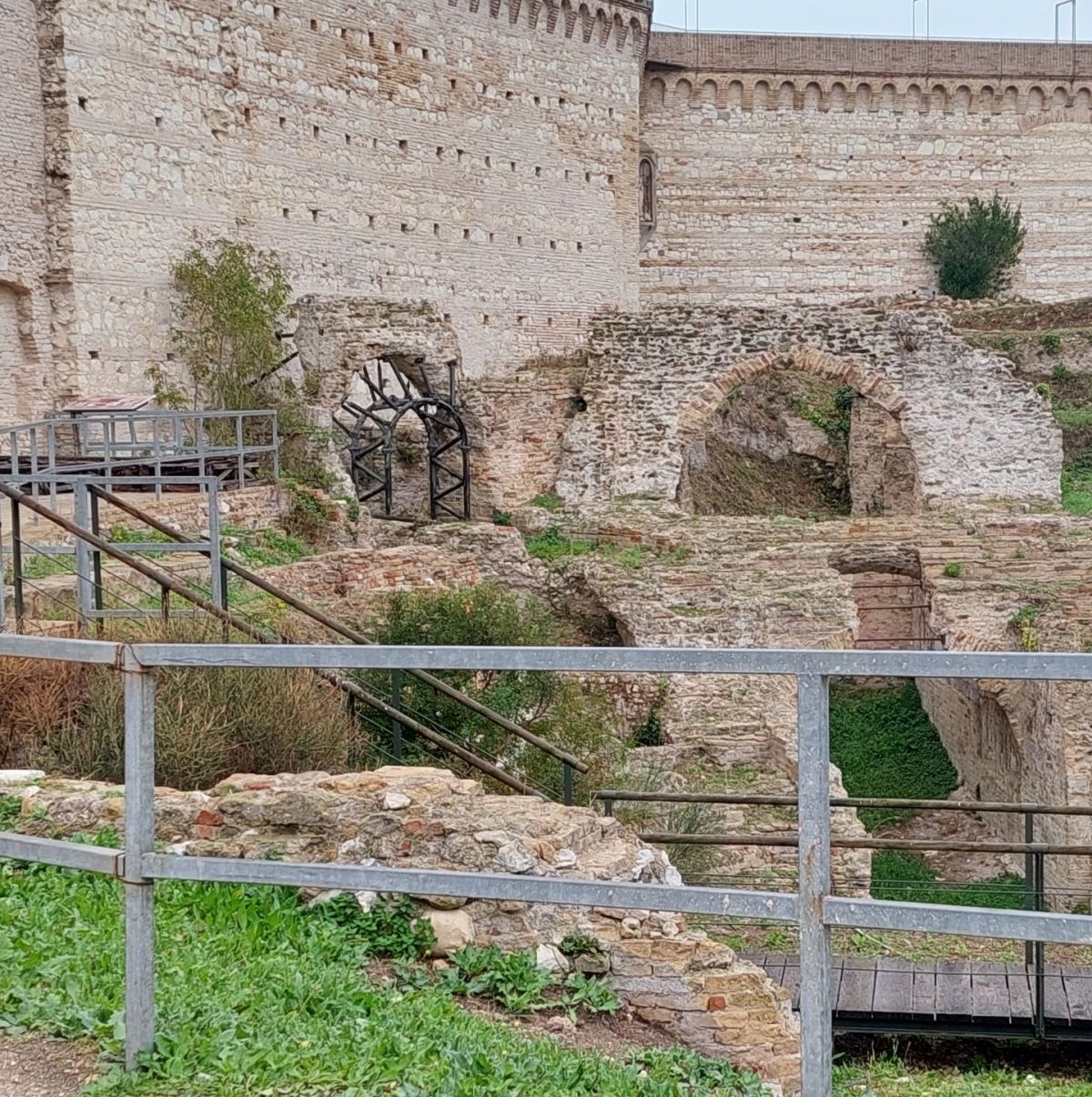
We had noticed the tell-tale, large oval space set back from the cathedral amongst the tightly packed buildings lower down the hill when we had taken our first post-lockdown visitors up to San Ciriaco’s a few weeks earlier. And having followed our noses slightly inland as we climbed, the sections of thick crumbling wall and half-buried archways came into view confirmed our hunch: that distinctive gap was, as we had suspected, a semi-excavated Roman amphitheatre. It turned out to have been built in the 1st century AD during the reign of Augustus and then enlarged by Trajan a century later when he was also re-building and expanding the port that still lies just a few hundred metres away at the bottom of the hill. It was abandoned three centuries later, however, and over succeeding centuries was used as a burial ground, then plundered for building materials, and later used as foundations for building work. It was re-discovered in the 19th century, but formal archaeological excavation of the site didn’t begin until after WW2. But from the remains unearthed so far, it is known that the arena could accommodate up to 10,000 spectators, seated over 20 terraces and featured separate gateways for soldiers and gladiators to enter through and for the dead and wounded to leave through. There is also substantial evidence, including a fully intact bath tub decorated with mosaics, of a comprehensive bath complex complete with hot water system. Unfortunately, it was very much a case of ‘do not touch’ with our latest find, though: since excavations are ongoing, the site is closed to the public and so can only be viewed from the street through the metal fencing across the front, with just a couple of sun-bleached interpretation boards to help us make some sense of these fascinating remains and provide a tantalising glimpse into this important chapter of the city’s past.

Still musing on what further Roman treasures may yet lie hidden beneath our feet as we turned back down the hill, my eye was caught by a small commemorative plaque high on a section of blank, imposing brick wall that looked as if it might be the buttress of some ancient fort.  Another unlikely find among the dusty shelves of this fascinating emporium? Yes. In barely twenty metres, we found that we had travelled forward through nearly twenty centuries. That imposing wall was actually a part of a 19th century prison that had been used as an air raid shelter during WW2, and the plaque, which only dated from 2015, was in remembrance of the 700 citizens who lost their lives on that site in an allied bombing raid on 1st November 1943. Beneath the plaque was a poster: to mark the anniversary of the raid the shelter was going to be opened for a couple of days of guided tours. The very next day I called the number on the poster to book our places…

That Time of Year Again

As usual, we had been um-ing and ah-ing about when to start for some time, keeping an eye on what our neighbours were doing as a signal for when would be the right time. Over the preceding week or so one of us would come in and report that “Maurizio and Flavia have started.” Or “There were stacks of crates outside the place with the goats.” Or “They’ve got nets out next door to the bakery on the way to the village.”

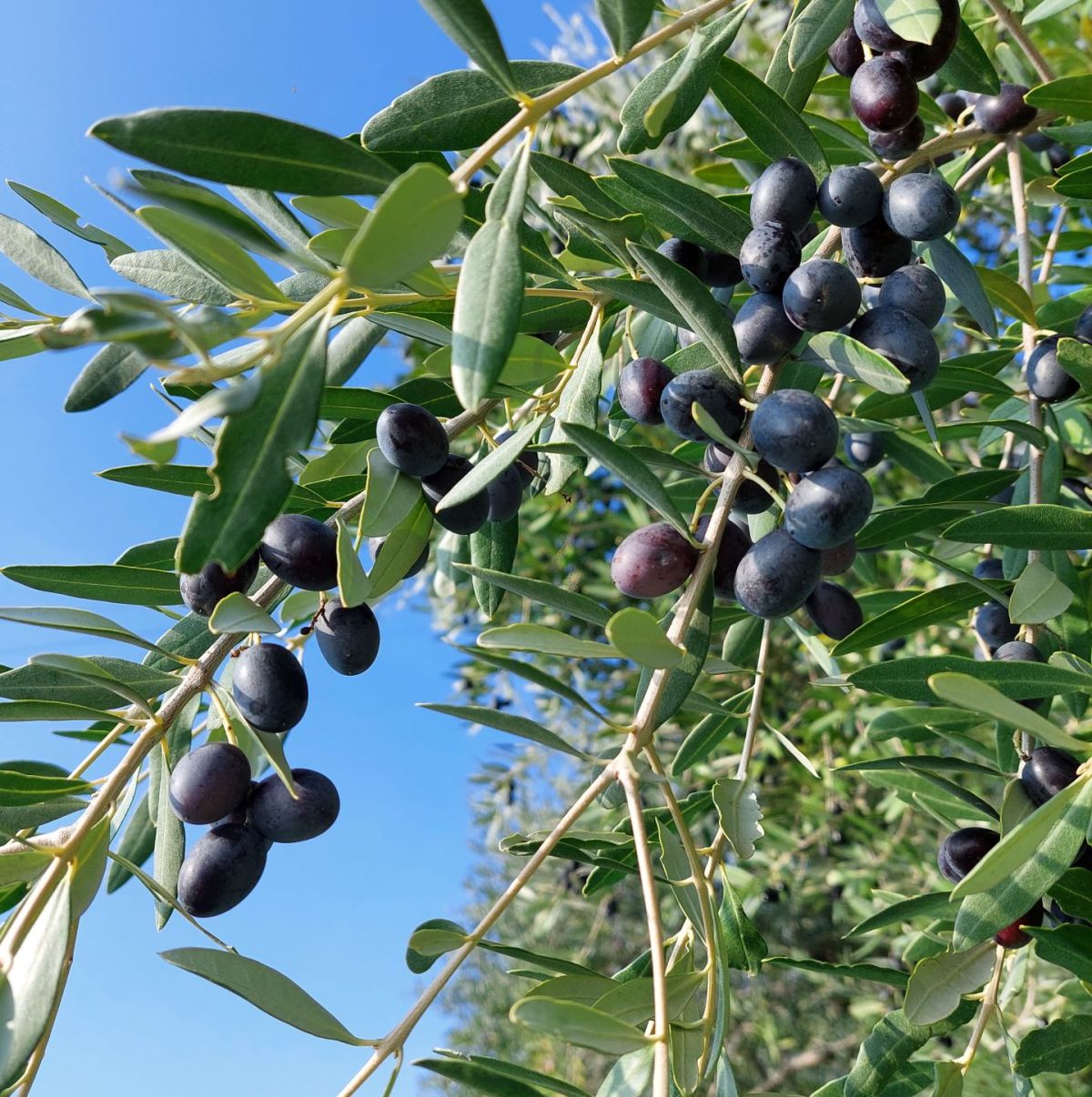
Our olive crop had ripened much sooner than usual thanks to the exceptionally long, hot summer with its weeks and weeks of intense, unbroken sunshine. By the start of October, the plump bright green fruit had already started to turn to a murky violet. Over the next couple of weeks, it darkened to purple, and finally, as the month drew to its close, to glossy black: tens of thousands of little black beads twinkling in the sun like fairy lights made of jet.  It was clear that our annual springtime pruning efforts were really starting to bear fruit – literally – and so we were confident of another good crop, especially as there had been very few of the violent storms that typically mark the shift from summer to autumn and that can easily devastate a crop at the last minute. But as ever, exactly when to harvest these little black jewels was a matter of judgement, and as ever, we had decided to take our lead from what other people were doing – hence the daily reports on what our neighbours were up to.

So it was the next available weekend that Mr Blue-Shirt retrieved the bright green nets, orange rakes and russet crates from the shed – and also (Mr Blue-Shirt being Mr Blue-Shirt) two chainsaws, the leaf-blower, the battery-powered secateurs, the pole shears, the bolt-croppers, the ladder, and the star of the show, his beloved abbacchiatore elettrico. This car-battery-powered device consists of a telescopic pole on the end of which is a pair of lightly interlocking rakes that jiggle back and forth like a pair of rapidly clapping hands and tease the olives from the tree as you pass them along the branches. What these gadgets lack in romance they more than make up for in efficiency, and the sound of their mechanical chatter drifting across the olive groves forms autumn’s background music.

Our confidence had been justified: at the end of three days’ non-stop raking, jiggling, snipping, sawing and gathering, no fewer than nine crates brimming with shiny black and purple fruit stood in neat rows on the floor of the van. Mr Blue-Shirt wiped his olive-stained hands on his muddy trousers and picked a few stray twigs from his fleece.
“Three crates more than last year,” he declared proudly. “I just checked last year’s photos on my phone. These are much fuller, too.”
“And it’s about twenty-five kilos per crate, isn’t?” I asked, rolling my work-stiffened neck and shoulders back and forth.
“Yep, so we must have a good two hundred and twenty-five kilos there – it was about a hundred and thirty kilos last year. Anyway, let’s get down to Rodolfo’s and weigh them in.”
We slammed the van doors shut, clambered into the cab and trundled off through the gathering dusk, down the hill to the oleificio we use to get our olives pressed. This is a small yet impressive set-up in the corner of a sprawling and immaculately kept olive farm down a lane on the way to Macerata. We had found it three years earlier by following the recommendation of our neighbour Enrico and the signs off the main road to Morrovalle, the next village from us.

“Spot on! Two hundred and twenty-three point four kilos” confirmed Mr Blue-Shirt, reading the display on the industrial scales by the door to the pressing shed.
“We don’t know what the yield will be like, though,” I cautioned “After such a dry summer, we may not get such a good yield as last year – although it might make the flavour better, I suppose”.
“Well, all will be revealed tomorrow: the chap who weighed our crop just said they’re really busy, so they won’t be able to press our fruit today. But can we just take a quick look in the shed? I love watching the pressing process.”  

Ever the engineer, Mr Blue-Shirt has never lost his fascination for all things mechanical and is still drawn to practically any kind of machinery like a moth to a flame, so the year before last he had eagerly accepted Rodolfo’s invitation to go and watch the entire process from weighing the fruit in to picking up our flagon of oil.  As we stood in the doorway of the shed that was little larger than a domestic double garage, but that was teeming with activity, he talked me through the same process that a few leathery-faced old codgers had explained to him two years before.

“Right, so once they’ve been weighed, the olives get tipped into that,” Mr Blue-Shirt bellowed above all the clanking and whirring, and pointed to the large steel hopper behind me. “They drop down through a stream of air that blows away all the twigs and leaves and so on.”
“We spent ages picking out leaves and twigs, though.”
“Yes, we picked out a fair bit, but there’s still loads of debris in there that you don’t want to end up in the oil.”
“I suppose so: you can never get every last twig out by hand. Where do they go next, then?” I asked, peering into the shed where three or four workers wheeled, shoved and carried different pieces of equipment back and forth.
“Well, they land in another hopper – See? Down there? –  which feeds them onto that belt.” He pointed towards a narrow conveyor belt that disappeared into the shed where it dropped the fruit into a large round tray.
“Look! This bit is great. They still use these huge rotating stone wheels to crush the whole olives into a sludgey paste. All this modern technology everywhere…” He gestured expansively around the shed … “…but it’s effectively the same technique they’ve used for centuries. I love it!”
“If it ain’t broke, don’t fix it, as the saying goes.”
“Exactly. And that bit’s just a modern take on ancient technology, too.” This time he indicated the large Archimedes screw that was feeding the black-ish goo up to the next machine. A precision-engineered, stainless-steel one, admittedly, but an Archimedes screw all the same. Then, once the black paste had wound its way up through the screw, it was fed into the slot-shaped nozzle of the next machine which spread a generous layer of paste onto a circular mat made of stainless-steel mesh.

“OK, you can see that when the mat is fully covered, one of those chaps lifts it off, puts on a fresh one, and threads the full one over that pole that’s actually mounted on a trolley.” I watched the fluid and practised movements of the young man who was obviously Rodolfo’s son. “They keep adding mats until they have a stack about a metre and a half high.”
“I’m pretty sure the mats date back centuries too. Only they were made of straw or something originally, I think. Anyway, presumably it’s the actual pressing bit next.”
“Yes, they wheel the trolleys into the press on the left there, which slowly pushes down on top of the stack of mats.”
“I’m a bit disappointed it’s not one of huge cast iron things with a great big comedy wing-nut on top you sometimes see rusting away in farmyards.”
“No, proper hi-tech this time: hydraulic. Four hundred kilos of pressure per centimetre squared,” he recited in full nerd-mode. I rolled my eyes.
“One of the old codgers showed me the pressure gauge when I came to watch,” he grinned. “It takes a good half hour to press all the oil out. It just trickles down the sides into that big steel tank in the floor.”
I peered down into what looked like a vat of used motor oil.
“Yuk! It looks revolting!”
“Yes, there’s still quite a lot of crushed up pulp, skin and bits of pip in there at the moment. So they pump the unfiltered oil from this tank into a centrifuge – that big cylinder over there in the corner – to remove all the remaining solids from the oil. I think the chap said it spins at something like 7000 revolutions per minute.”
“And so that’s the clean oil coming out of the centrifuge from that spout?” I asked, pointing at the glossy, yellow-green stream pouring into the flagon that had been positioned below the spout.
“Yup! And that’s it, done!”
“It must have been so satisfying to see our oil pouring into our flagon when Rodolfo talked you through the whole process”
“It was! I was dying to taste it, but it was still too cloudy and needed to settle for a couple of days.”

“So go on, tell me: how much have we got, then?” Mr Blue-Shirt asked me the next afternoon as he helped heave our flagon from the back of the car and down into the cantina.
“Thirty-eight litres!” I said smiling broadly.
“Thirty-eight litres?! That’s amazing! But you were right about the lower yield. We had getting on for double the quantity of fruit this year, but that’s nowhere near double the quantity of oil.”
“Yes, and it’s not as if the fruit wasn’t ripe. Mind you, Rodolfo still reckons it’s a good yield. And he was very complimentary about the quality too: I was also right about the effect of the dry, sunny summer giving a richer and more intense flavour.”
 “So quality as well as quantity. Let’s have a look…”

Down in the suitably halloweeny gloom of the cellar Mr Blue-Shirt unscrewed the lid of the shiny, stainless-steel flagon and shone a torch in through its wide neck. The beam illuminated the fragrant greeny-gold oil that nearly filled the container and I inhaled deeply, savouring the distinctive grassy, peppery aroma. I swear I could practically feel the glow of sunshine on my face again and hear the song of the crickets echoing around inside the flagon. It was not just oil; not just Casa Girasole oil. It was liquid summer…

The Gift That Keeps On Giving

After almost exactly two years without any visitors, we finally broke our duck in early September when two of our UK blacksmithing pals, Bill and Monica, came to stay for a few days. It was strange how nervous we felt before their arrival, how worried we were if we could even remember how to entertain visitors, if the guest room was up to scratch, if we still knew how to cook for more than two people. It was all nonsense of course. The instant they pulled onto the drive, the nerves dissolved beneath the huge wave of joy at their being here, with us, in our space that washed over us. And, needless to say, we also found that looking after visitors still came as naturally to us as ever.

So just a few weeks later as the arrival of our next visitors started to draw closer, we found ourselves now free of those first night nerves and simply looking forward to David and Samantha’s long-awaited visit with almost childlike, counting-the-days-down excitement. Fellow members of the informal Friday night ‘Sundowners Club’ at our local pub in Lincolnshire, we had first got to know each other by letting off steam together at the end of the working week, sharing in the general silliness and banter bouncing back and forth between a gas fitter, a pilot, an estate agent, a mental health worker, two RAF members, two primary school teachers (David and Samantha) and the two owners of a blacksmith’s forge (Mr Blue-Shirt and me). But over time we grew closer, spent more time and did more things together as we found that we had much more in common than frequently maddening jobs and a taste for real ale and prosecco.  Slightly improbably, we even ended up working together when David, then a primary school deputy head, was involved in a national art project for schools that led to us running drawing workshops and then forging workshops with his pupils and the work they produced with us subsequently being included in an exhibition at the National Gallery.

Their jobs naturally mean that they can only come over in the school holidays, and when they do, they just need to switch off and stop for a few days. So after fifteen months in and out of lockdown, a succession of school closures and re-openings, dealing with on- and off-line teaching, bubbles, staff and pupil absences – and all while still trying to meet the requirements of the national curriculum – that need had become more pressing than ever, especially since they had already had to cancel what had become their regular spring half-term trip right at the start of the pandemic.

For our part, it had simply been way too long since we had enjoyed their company, swapped stories and put the world to rights together, laughed together, eaten together, drunk too much together, and just been silly and mucked about together. So in the run-up to their trip, we had thought about what we could do if the weather was good and what if it was not, which restaurants we might want to go to, what sights we could show them, what dishes we might cook, which walks we could do, what events we could take them too. Whatever we did, though, we knew were just going to have fun re-connecting and just being together again.

Three days before their arrival Samantha confirmed they’d both boked their pre-flight Covid tests required for entry into Italy, downloaded their digital proof of vaccination and completed their passenger locator forms. They were all good to go.

A couple of hours later, though, David let us know us that a colleague he’d shared a car with a few days earlier had tested positive with a lateral flow test. Not a problem, we reasoned: lateral flow tests are known to be a bit unreliable. And the colleague had surely been vaccinated. Plus David had done a lateral flow test as soon as he’d heard and that had been negative, so…. It’ll be fine. No need to worry.

Mr Blue-Shirt’s phone pinged again while we were having dinner; it was David. He’d been picked up by the NHS tracking app: his colleague had received a positive PCR test result and so he too now needed to take a PCR test.  It’s no big deal, we told ourselves. It’s just how the system works. The app is bound to be messaging loads of other contacts. He and his colleague can’t have spent that long in his car together anyway. It’s precautionary: he’s been double vaccinated. It’ll be fine. No need to worry.

They had both already taken their PCR tests earlier that day as part of their pre-flight routine, so it was just a matter of waiting to get their thumbs-up and smiley-face emojis confirming what we all already knew. It’s just a formality, the ever-Tiggerish David assured us: he didn’t have any symptoms and felt as fit as a fiddle. It’ll be fine. No need to worry.

The ping we were waiting for came the next morning, almost exactly 48 hours before we were due to be picking our friends up from the airport. David had forwarded the notification he’d just received from the NHS Covid-19 app: “Your coronavirus PCR test (or other lab test) result is positive. It is likely you had the virus when the test was done. ….. Self-isolate immediately for ten days to avoid infecting others.”
In his succinct accompanying message David spoke for all four of us.
“Bollocks.”

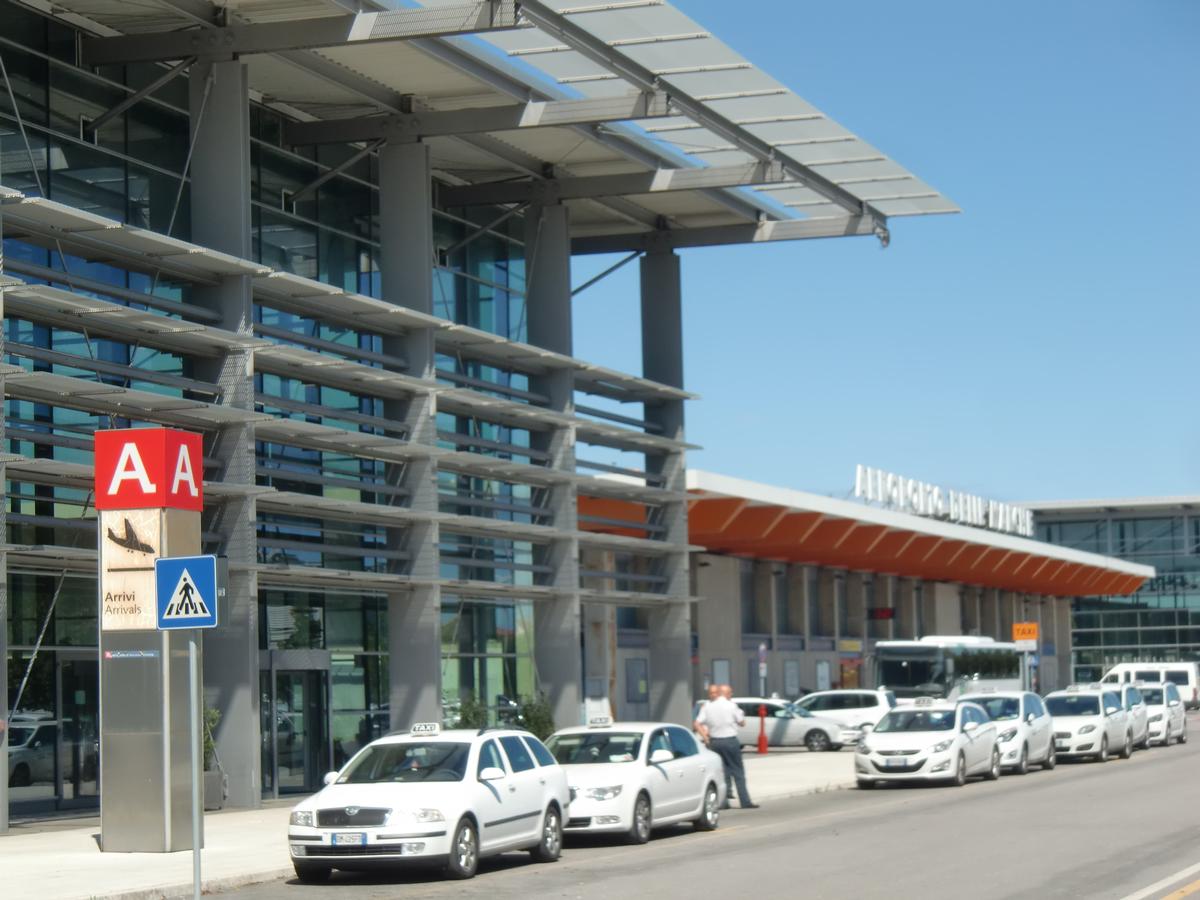
Image of Raffaello Sanzio Airport, Ancona courtesy of http://www.structurae.net

Politics and the Pandemic

Mario Draghi has been Italy’s Prime Minister for eight months now. Even in normal circumstances, that is pretty good going in a country that is famous for the speed at which it gets through governments. But in the current climate, it must surely count as a major achievement.

Draghi was appointed by President Sergio Matarella in mid-February following the failure of the then Prime Minister, Giuseppe Conte, to build a new coalition after Matteo Renzi withdrew his tiny Italia Viva party from the Conte government in a senseless political tantrum that lost the coalition its wafer-thin majority and collapsed the government. The timing of Renzi’s move could barely have been worse: the country had only just emerged from its Christmas lockdown, industry and commerce were desperate to start receiving some of the €200bn EU recovery funding Italy had been granted, and the vaccination programme had yet to get out of the starting blocks. So in order to steady the ship the ever-pragmatic Matarella decided against calling a time-consuming and distracting general election and instead sought the safest pair of hands he could find with which to entrust the task of putting together a technocratic ‘government of national unity’ capable of ensuring the country’s safe passage through the stormiest waters it had experienced in a generation – and took little time to choose those of Mario Draghi.

Known as ‘Super Mario’ after successfully rescuing the Euro in the midst of the 2012 European debt crisis, Draghi is a former Governor of the Bank of Italy and former President of the European Central Bank, roles which earned him a formidable reputation as an astute political operator with legendary negotiation skills. And he wasted no time in applying these skills: far more quickly than anyone anticipated he managed to bring all the different parties and factions together and form a truly cross-party cabinet that immediately got on with the business of steering the country through the continuing pandemic.

Once Brussels had got its vaccine procurement act together and member states could push ahead with getting people inoculated, Draghi oversaw the successful roll-out of the vaccination programme, which has so far achieved a 75% vaccination rate. The spring surge that peaked at c.26,000 daily cases and that came along before the vaccine programme had fully gained traction was contained by a series of regional lockdowns, but in early June, most restrictions (other than obvious basics such as mask-wearing and social distancing) were lifted again. Then by the time the Delta variant arrived, parameters, thresholds and restrictions had all been adjusted in a way that enabled the country to manage the particular characteristics of the new strain without either an explosion in cases or reimposing restrictions. And by then, of course, the vaccination programme was also running over half a million jabs a day across all age-groups, including teenagers. Although the campaign slowed over the holiday period, its success up to that point, along with the other measures still in place, meant that the summer surge was contained at just under 8,000 daily cases and has steadily fallen back to currently around 3000 daily cases .

The new factor in the mix, though, has been the Green Pass, the digital or paper certificate that provides proof of vaccination, of a recent negative test result, or of recovery from Covid-19 which was introduced in June, mainly to facilitate travel and allow entry to large scale public events – initially at least. And therein lies the source of the choppier waters that the Draghi government has now hit. When it was introduced, the Green Pass was accepted, it seemed, as a minor yet necessary inconvenience since it was seen as an effective means of nudging more people into getting vaccinated – jabs of course are free, but tests cost €15 a time. And when its use was extended to enclosed venues such as museums, theatres, cinemas and restaurants later in the summer there was still little objection: going to such places is optional and inconsequential, and if you are that opposed to the Green Pass, you can always wait for No Time To Die to come out on Netflix. When it was made obligatory in all public sector workplaces, however, the first distant murmurings of discontent could be heard. The nudge, it seemed, had suddenly become quite a bit sharper: people don’t have any choice about going to work, after all. But in the end, there was little active resistance from public sector employees, who perhaps regarded it as an acceptable trade-off for the relative job security and other benefits they enjoy.

Those murmurings became louder, though, when in mid-September the government decided – with overwhelming parliamentary support – to extend the Green Pass mandate to all private sector workplaces from 15th October until the end of the year (with non-compliance risking fines or suspension without pay) at which point some started to feel that the nudge was becoming more of an armlock. And while it was only a minority who objected to the policy, that minority was becoming increasingly disruptive. Initially, those involved in the anti-Green Pass demonstrations that took place in several larger cities were members of Italy’s relatively small anti-vax movement, traditional civil rights campaigners and self-styled ‘freedom activists’. Subsequent protests, however, were hijacked by violent neo-fascist groups, with the worst violence erupting in Rome on the day the mandate took effect when far-right protesters stormed a hospital emergency department and the HQ of the country’s largest trade union. The mob had overplayed their hand, though, as everyone across the political spectrum immediately condemned the violence and the focus of concern quickly shifted from the merits or otherwise of the Green Pass to getting neo-fascist organisations banned. Indeed, the next day’s protest in Rome was not an anti-Green Pass event, but an anti-fascist rally called by the union whose offices had been attacked.

After the shocking events in Rome – attacks by fascists on trade unions arouse some very dark memories in Italy – the protest movement, though still active, seemed to lose momentum, with events in Bologna, Turin, Florence and Rome attracting fewer participants than originally predicted. There had also been predictions of widespread disruption at ports up and down the country, but in the end, while there was some disruption in Genoa and Ancona, it was only in Trieste that dock workers went ahead with a full-on strike and a sit-in, and this was swiftly broken up by police using water jets in a clear indication that Draghi remained unwilling to make concessions. And it seems that most are in favour of the government’s continued resolve. Indeed, even that veteran populist Silvio Berlusconi voiced his support by pithily pointing out that ‘a hero is someone who blocks a train to Auschwitz, not someone who blocks a port over the Green Pass’.

In a poll held at the start of the week, 65% of respondents were found to be in favour of the Green Pass and 24% against, while 63% were against offering free tests to those without the Green Pass (a proposed compromise position that was eventually rejected) and 30% in favour. More tellingly still, Draghi himself still enjoys a very high personal approval rating, with 58% having faith in him while 27% do not. And notwithstanding all the protests and unrest, the policy appears to be having its desired effect anyway. Not only are many more people are getting tested, meaning fewer undiagnosed cases are falling through cracks (thereby also helping to slow the virus’s spread) but the inoculation rate is also increasing as anticipated, thus speeding progress towards getting the economy fully back on its feet sooner rather than later too. It would seem that Super Mario has not lost his touch.

Image courtesy of http://www.ansa.it

Doing our best to do our bit

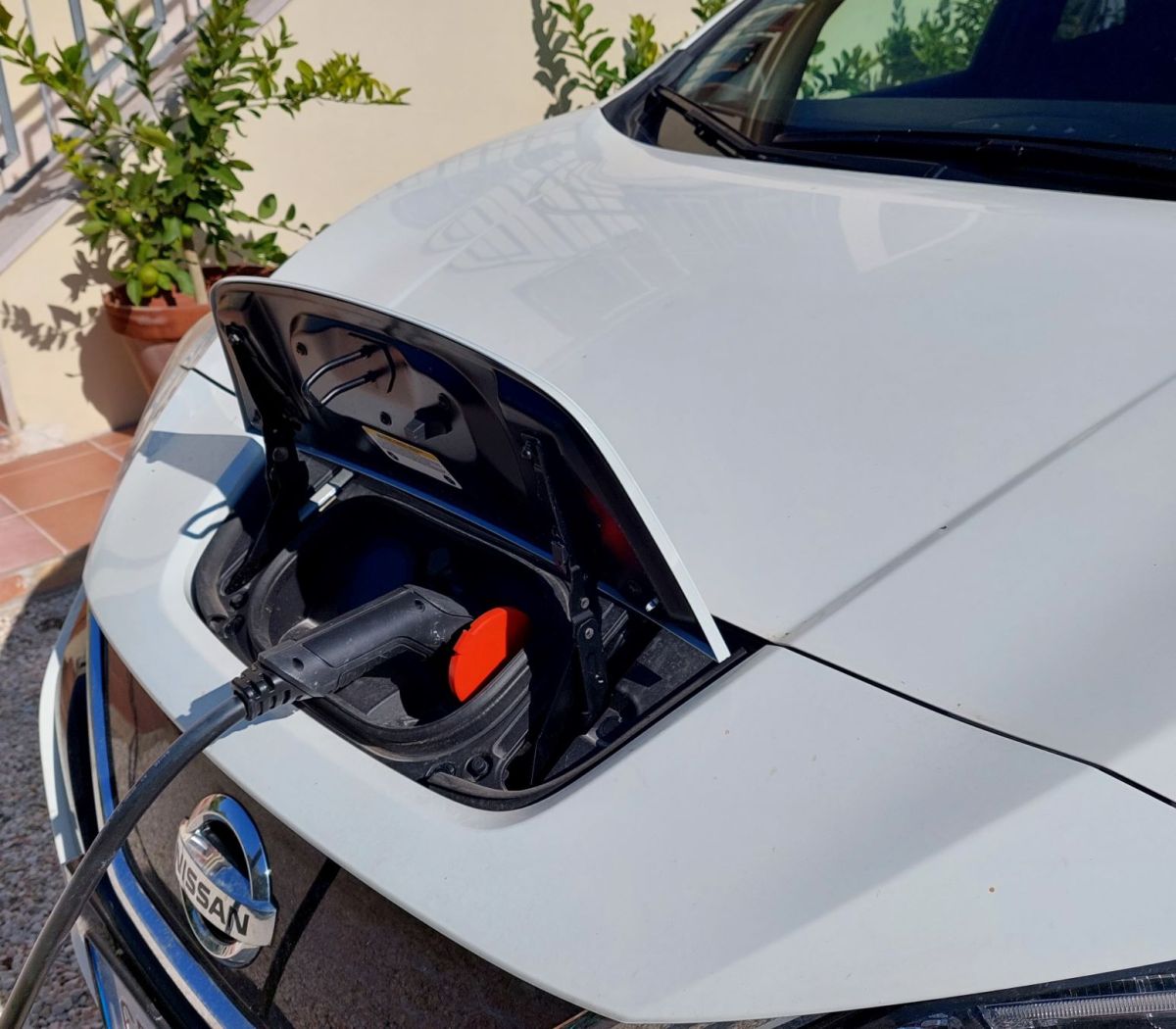
Just in the last few days autumn leaves have started to skitter and cartwheel across the drive, scraps of red and gold and orange like the final fragments of summer sunshine being swept away on the increasingly chilly breeze. There is, however, another kind of leaf on the drive that will be remaining green: the fully electric car that we’ve now had for nearly five months, our very whizzy Nissan Leaf.

It is the final piece in our complex renewable energy jigsaw puzzle which has enabled us to become almost completely self-sufficient in green energy. The bulk of the jigsaw consists of eighteen slimline photo-voltaic solar panels on our south-facing roof; a stack of batteries in the hall cupboard together with the electronic brains of the system; an air-source heat pump (ASHP) in the upstairs porch to provide hot water and heating; a new, super-efficient boiler as a back-up-cum-top-up, and a clever gizmo that allows the system to switch between the two squidged into the boiler room, as well as three new combined heating/cooling (fan coil) units for our bedroom, the guest bedroom and the sitting room. And, almost as an after-thought originally, an electric car-charging point in the carport ‘just in case’.

In the long weeks during which the system was being installed and two further lockdowns came and went, though, Mr Blue-Shirt spent hours online conducting extensive research into the different types of car technology currently available as well as their respective shortcomings. Then after several more weeks spent weighing up the pros and cons, we eventually came to the conclusion that, on balance, going electric was the right thing to do, and in view of the deepening climate crisis (not to mention the various incentives available as part of the post-Covid economic recovery package) now was the right time to do it. Yes, we accept that the current generation of electric cars are not the Holy Grail of environmentally-friendly driving. Yes, deposits of the lithium, cobalt and nickel used in batteries at the moment are being depleted at a rate that is probably not sustainable in the long-term, and the mining of them is also damaging to ecosystems and communities. However, each car involves a ‘one-off’ use of those minerals that is amortised over the lifetime of the vehicle; added to which, battery recycling and manufacturing technologies are improving all the time. And, crucially in our view, switching from our filthy old diesel Renault to a state of the art, fully electric car will at least enable us to significantly reduce our own CO2 emissions not just in relation to a single purchase, but on an ongoing basis for the foreseeable future. In our assessment, doing something is better that doing nothing, plus whatever we can do at a given time is surely what we should do, and this is the best we can do at the moment. Don’t let the perfect be the enemy of the good, as Voltaire (more or less) put it.

So having decided to take the plunge, Mr Blue-Shirt did yet more research, this time into the different vehicles on the market in our price range. Then once movement restrictions permitted, we booked extended test-drives of the vehicles he had short-listed which enabled us to see what the driving experience was like and how accurate the range data were, to see how the charging process worked, and to test out the public charging network. One early contender was swiftly abandoned as it had been discontinued and, bafflingly, replaced with an eye-wateringly expensive alternative, another was rejected, despite its impressive performance, because it was too uncomfortable to sit in for longer than about 15 minutes, and a third was rejected without getting in it because it was so horribly ugly and dated both inside and out, despite its hefty price-tag. So in the end, the Leaf was the Goldilocks option for us, partly because of its features, comfort and styling, and partly because of the combined effect of government subsidies, the manufacturer’s discount and the dealer’s special offer that gave us a ‘can’t afford not to’ 35% off the list price. The real slam-dunk, however, was Nissan’s decade-long proven track record in electric vehicle technology.

 So what has our experience of electric motoring been like so far? Well, for a start, like all electric cars, the Leaf is extremely quiet and extremely smooth, giving the relaxing impression of gliding effortlessly along the road. ‘Range anxiety’ is seldom an issue since its 62kw battery gives us a maximum range of nearly 400km/250 miles, which is more than enough for our day-to-day needs, especially since up to 25% of the energy used comes from the car’s regenerative braking system whereby the energy expended in braking is recycled back into the battery. Incidentally, since we have had the car, around 98% of the energy we have used has come directly from our solar panels, and when we do require top-up from the grid, the mains supplier we use provides exclusively green energy. And on the rare occasion we do need to ‘fill up’ at public charging points, we are still not using that much fossil-fuel-based energy since nearly 40% of Italy’s mains power supply now comes from renewable sources. Added to which, any dirty energy we use to recharge the car when we are out and about is always partially and often completely offset by the unused clean energy that we are generating at home that goes straight into the national grid.

Naturally, there are some differences that take a little getting used to. Firstly, charging is generally a slow process that takes up to 8 hours from flat to full using our domestic supply, so we have developed a habit of topping up after practically every trip. This also means that longer journeys do need to be planned: itineraries worked out, distances measured and charging points identified – and there are lots of apps available for doing this. That said, the apps are sometimes inaccurate, or not completely up to date and consequently can be contradictory, with one app telling you, for instance, that a given charging point is available, while another tells you it is out of service or occupied.  In addition, the charging infrastructure is not yet as comprehensive as it needs to be if electric motoring is to become as widespread as most policy-makers wish. Charging points are often located in out-of-the-way places beyond walking-distance from other amenities, and fast charging points that can take a car from almost flat to full in under an hour are still few and far between. That said, more and more points are popping up in more and more places all the time, with car manufacturers themselves becoming proactive in the expansion of the network, having realised that motorists won’t buy their electric cars until and unless a comprehensive charging infrastructure makes electric motoring a viable choice. There is one quite disproportionately satisfying little win-win we have discovered, though: in places where parking is at a premium, we quite often find that the only available spaces are in fact electric car charging points where the parking itself is actually free; you only pay to top-up your battery, which seldom costs more than the parking would have done, but you get a few more kilometres of range thrown in.

Since we got the car, we have driven just over 8000km/5000 miles. This has saved us a jaw-dropping €600 in diesel we haven’t bought (offset by just €25 or so for the power we have bought). More significantly from an environmental perspective, however, is that based on the same mileage in an equivalent non-electric vehicle, in under five months we have saved a staggering 938kg in CO2 emissions.

So no, our Leaf’s green credentials may not be perfect, but they are still pretty damn good. And doing even a little bit of good is surely better than doing a whole load of nothing.

More Number Crunching

It was June when I last did this, when I last told of my nightly ritual of checking that day’s Covid-19 stats and, by that stage, daily vaccination numbers as well. And it was in June too that, with each set of data going unequivocally in the right direction (down to c.1000 new cases per day and up to over 500,000 jabs per day), the whole country moved, region by region, from the yellow zone into the white zone. In this long-awaited promised land, there was no more night-time curfew, no more restrictions on movement and gatherings, and all attractions and amenities (with the exception of discos and nightclubs) could open fully. Only mask wearing in public indoor settings, social distancing rules and capacity restrictions remained in place, and the ‘Green Pass’ was introduced. This digital or paper certificate provides proof that the holder has either been vaccinated, has recovered from Covid-19, or has tested negative in the preceding 48 hours and was originally designed to facilitate travel and to allow people to attend large gatherings including weddings and sports events. With the Delta variant casting an ever longer shadow, though, caution was the order of the day and every step forward was heavily circumscribed with caveats, making it clear that this was not a one-way street. The law that introduced Green Pass also enabled it to be extended to other areas of activity if necessary, and the system of yellow, orange and red zones introduced back in November was retained, albeit with some tweaks to the threshold criteria to reflect the characteristics of the new dominant variant. To move from white to yellow, for instance, a region would now simultaneously need to exceed 50 cases per 100,000 inhabitant and have over 15% of normal beds and over 10% of ICU beds occupied by Covid-19 patients.

All this was a far cry from the same period last year. After three months in almost total lockdown, case numbers had tumbled to the low hundreds per day by mid-summer, by which time there were only about sixty people in intensive care nationally and daily fatalities were in the teens. Consequently – and while I have little doubt that the decision was made in good faith on the best information available at the time, it now seems over-optimistic at the very least, if not borderline reckless – many restrictions were abandoned and pretty much everything was able to re-open in some form or another, albeit with basic safety protocols still in place. The sun shone, the sea was warm, the beaches full, restaurants busy, and families and friends gathered. But everyone was just a little bit too de-mob happy and the nation lowered its guard, seemingly in the naïve belief that this nightmare was over. At that stage, moreover, there was no real framework in place for reimposing restrictions and vaccines were still awaiting approval. In retrospect, the resulting surge in cases going into the autumn was inevitable, as was the rapid introduction of a whole new raft of measures (principally the 3-tiered traffic light system) aimed at halting the disease’s spread and, politically more importantly, avoiding another national lockdown.

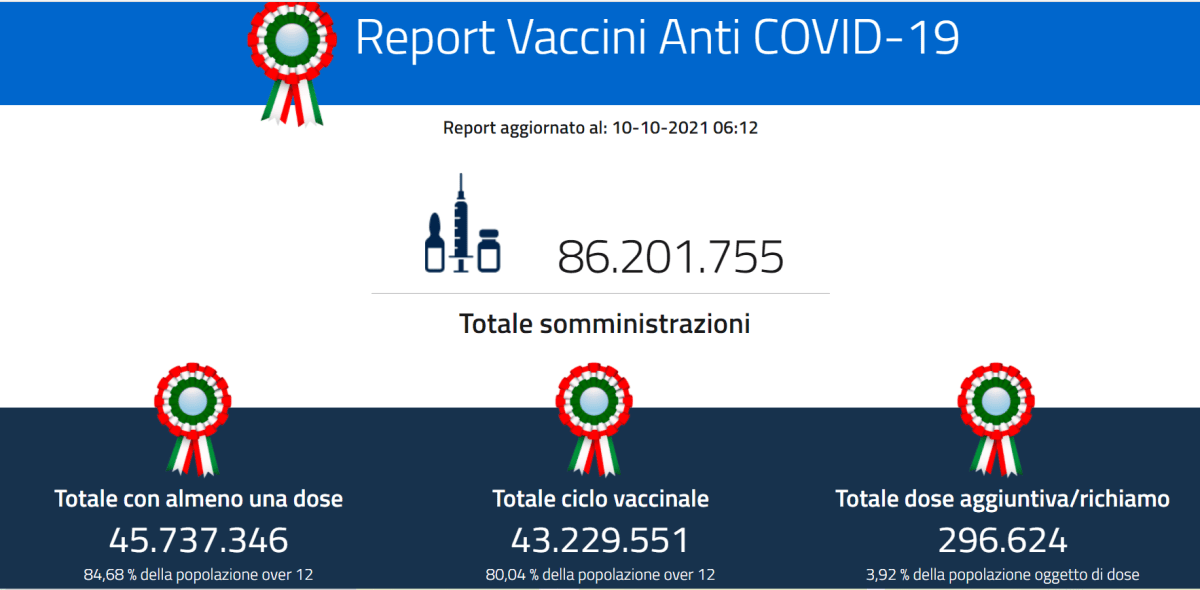
And now, a year on from the start of that huge second wave which peaked at 40,000 cases per day and the two further but successively smaller waves that followed, we are still not yet quite back down to where we were at the end of last summer. In terms of simple numbers at least: since the latest surge in July and August, daily cases have fallen from a peak of around 8000 to just under 3000 this week, hospitalisations have halved to about 2700 and daily fatalities have dropped from the mid-70s to the low 30s, although with the Delta variant these had risen much more slowly than in previous waves. Critically, however, thanks to 73% of the total population having now been fully vaccinated (including over 60% of 12-19-year-olds), the trajectory this October is unambiguously downwards. The scope of the Green Pass has also been extended to include most public indoor amenities and activities, and from mid-October it will become obligatory for all employees in the both public and private sectors, although for now only until the end of the year when the State of Emergency from which such measures are derived is currently due to lapse. There has been some vigorous resistance to this extension, with it being seen by civil liberties groups as compulsory vaccination by the back door in light of the inconvenience and cost (at €15 a time) of getting tested (soon to be every 72 hours) if you haven’t been jabbed, or if you refuse to get a Green Pass at all, face being suspended from work without pay. But although the government has not ruled out compulsory vaccination by the front door, the ‘nudge’ effect of the policy appears to be working: vaccination rates, which dropped back significantly over the holiday period, have picked back up again to around 180,000 per day. As a result, and just 10 days late, the country has now hit the target it set back in March of inoculating 80% of the ‘vaccinatable’ population (ie over-12s) by the end of September: as of this morning, this figure stood at 80.04%.

So on the back of the hard-learned wisdom gained from the false dawn of a year ago, there are encouraging signs that this autumn and winter could be a lot less worrisome than last year.

Note: at the time of writing, Le Marche has vaccinated just shy of 78% of its eligible population, has an infection rate of 29 per 100k inhabitants, while 6% of both ICU and of non-ICU beds are occupied by Covid-19 patients.