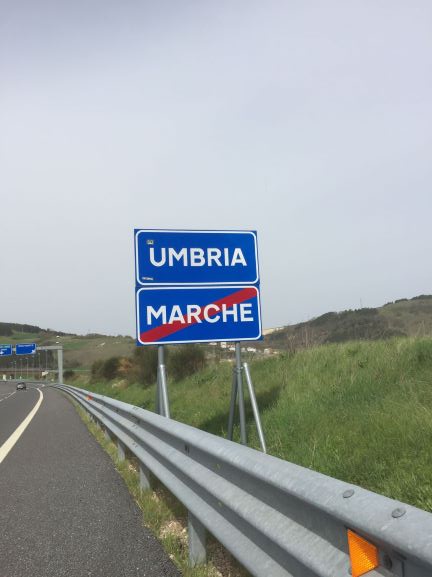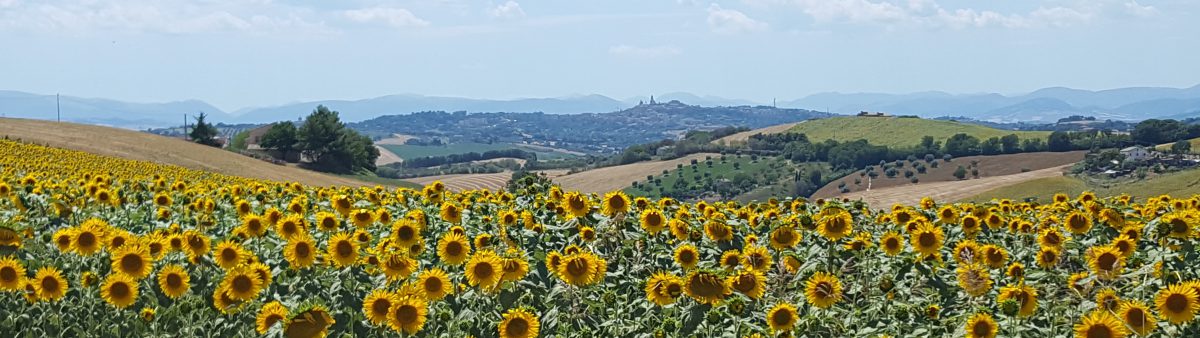
Not Quite Back to Normal

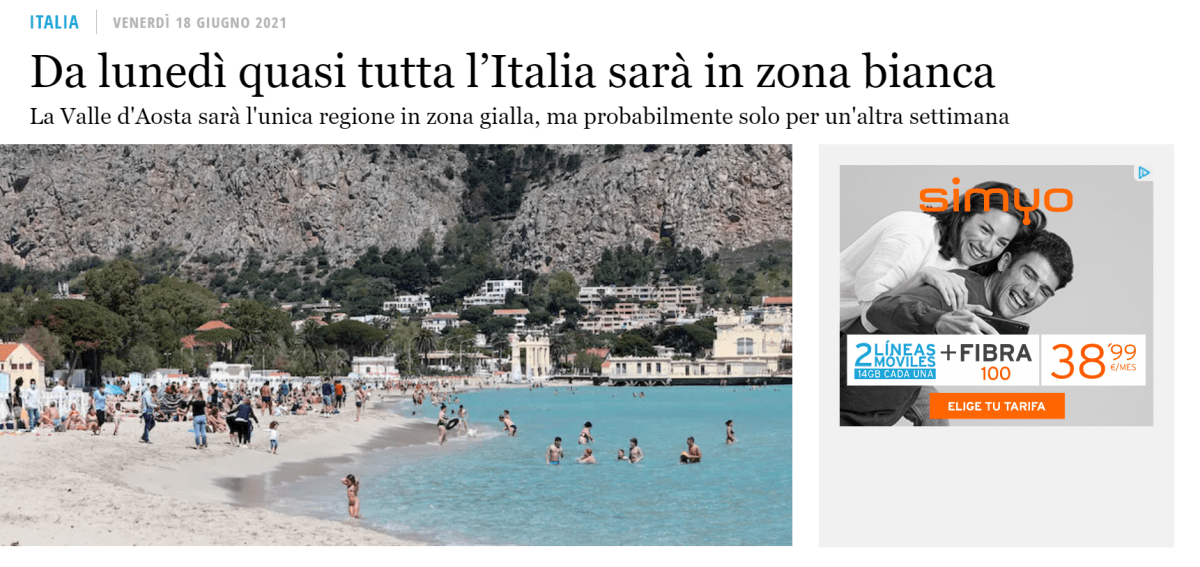
The holiday season is upon us. The beaches are open, the sun-loungers are full, the sea is warm, restaurants are doing a roaring trade and business and factories will soon be falling quiet as they shut up shop for their summer break.  So far so normal. The whole country is, after all, now in the zona bianca (white zone). That said, wearing masks remains obligatory indoors, social distancing is still in place and venues still face capacity restrictions. In addition, access to many events is restricted to those with a ‘Covid Green Pass’, ie those who can prove either that they are full vaccinated, that they have tested negative for Covid-19 in the previous 48 hours, or that they have officially recovered from Covid-19. These sensible measures aside, though, nearly all other restrictions have been either eased greatly or lifted completely. The curfew has gone, we can move freely from one region to another, we can welcome an unlimited number of visitors into our homes, many of the rules governing weddings, christenings and funerals have disappeared, and museums and galleries, theatres and cinemas, gyms, pools and spas have all re-opened. 

Only it still isn’t Italy in summer quite as we know it. For a while I couldn’t quite put my finger on it. It wasn’t just the more Anglo-Saxon approach to queuing in bars and gelaterie. It wasn’t even the almost total absence of hugs and handshakes among friends greeting each other at the beach. And it certainly wasn’t the weather, which has been as hot and sunny as mid-August since early June. It finally struck me the other day on my run into the village. I was toiling up Via Santa Catarina (aka Heart Attack Hill) in the shade of the steep grassy bank that rises up to the small complex of flats just outside the historical centre. The bank that at this time of year is usually bristling with rough timber posts that bear colourful placards advertising some sagra, festa, concert, pageant, exhibition or market taking place in any of half a dozen nearby villages. The bank that for the second year running remains conspicuously bare, the customary placards substituted with a scattering of self-sown sunflowers and garlands of bindweed blossom. For the recent national ripartenza (re-opening) came too late for the vast majority of these otherwise annual events to be able to go ahead and so they have had to be put on hold once again.

And for the second year running that is leaving a pretty big hole in the cultural life of the country, as the sheer number of these local events that normally take place throughout Italy during the summer months is truly remarkable – and not just in tourist hot-spots such as Florence or Venice, the Lakes or the Amalfi Coast. Even in tourism-lite Le Marche, our village – with its population of barely 3000 souls – typically holds a series of 3- or 4-day-long events between May and August, all of which are regular fixtures in the summer calendar. Normally we would have had the annual artichoke festival back in May, the annual pizza festival in July, the medieval weekend, the celebration of apiculture and the Ferragosto fireworks in August, and over the weekends in between, there would have been well over a dozen live music, dancing and sports events, many of them especially for children. Our village is far from unique in this respect, mind: the July and August issues of Corriere e Proposte, the catalogue of events that the region normally produces every month, typically contain around a hundred and fifty closely printed pages listing literally hundreds of events in several different categories. Usually on any weekend over summer we could choose between, say, A Sagra della Polenta up in Penna San Giovanna or a Horror Festival over in Monte Urano, the Palio down in Servigliano or maybe the Street Food Festival in Pedaso. This summer they haven’t even published Corriere e Proposte; it simply isn’t worth it for the meagre number of events that are happening across the region. In Montelupone, for instance, the programme has been reduced to a handful of low-key musical events in the main square, a classic car rally, and the apiculture fair, with access still only available to those with a Covid Green Pass.

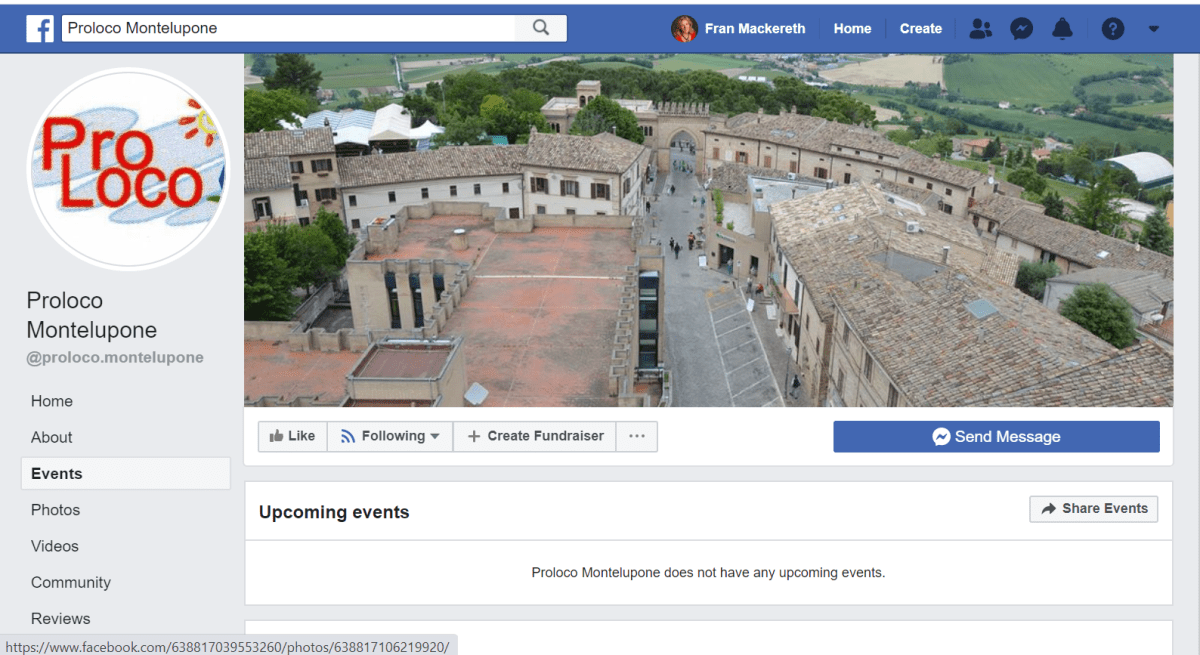
One thing that has not changed, however, is that most of these events have, as usual, been organised, promoted and run entirely by the local ‘Pro Loco’, often with a degree of financial or logistical support from local sponsors as well as the Comune (town council). Literally translated, Pro Loco means ‘in favour of the place’ and so the purpose of each of these entirely voluntary, not-for-profit associations (of which there are now some 6200 nationwide, the first having been founded in 1881), is the promotion of the town, its sites, its history, its traditions, its culture and – of course – its gastronomy.

Interestingly, the principal purpose of all this activity is not, in the first instance, to attract tourists, but to improve the quality of life of the local residents by celebrating community identity and strengthening community ties. As such, the Pro Loco movement is in many ways an embodiment of the peculiarly Italian notion of ‘campanilismo’, which is rooted in the need in times past for communities to pull together to defend the parish bell tower – the campanile.  This highly developed sense of local allegiance is in turn derived from the fact that until little over a hundred and fifty years ago Italy was made up of a patchwork of perpetually warring kingdoms and dukedoms, imperial territories and papal lands, where conflict between adjoining regions, towns and even neighbourhoods was commonplace. Loyalty to the local was consequently often a matter of survival.

So it is a sad irony that in a period when people from one end of the country have been under sustained attack from a shared enemy in the form of an invisible virus and notions of the common good and reciprocity have seldom been more important, their communities have also had to be denied one of the very means of publicly reaffirming that crucial sense of solidarity and togetherness. We can only hope, therefore, that normal service will soon be resumed and that Pro Loco groups everywhere still be dusting off their collections of trestle tables, benches, banners, pergolas and PA systems and (providing we are able to remain in the zona bianca, of course) gearing up for an autumn of celebrations for the grape harvest, the truffle season, the hunting season, the olive harvest and even Advent. And for having got as far as we have through this crisis in the only way possible: together.  
Walking in the Footsteps of the Righteous

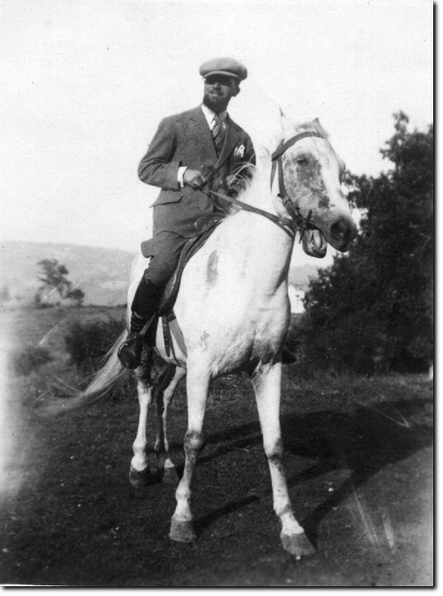
Heroes crop up in the most unlikely places. And we certainly had not been expecting to come across one as part of a Sunday morning hike in the gently rolling hills between Tolentino and San Ginesio just to the north of the Sibillini Mountains and about thirty kilometres south-west of our place.

These hikes normally take us to some of Le Marche’s more remote and rugged corners, up where the wind is brisk and the air is cool. And on this particular Sunday, when the whole country was tightly swaddled within a steamy blanket of suffocating heat, we could certainly have done with a few hours in one of those fresher corners. But on this occasion, starting from just outside the tiny village of Camporotondo at a pretty agriturismo (whose owner, Luca, was our guide for the day), our hike took us along well-used gravel tracks and even tarmac-ed roads, past fields of wheat and sunflowers and through groves of olive, fig and cherry trees, seldom climbing higher than 300m above sea level. There was method in the untimely choice of routes, however. On this particular hike, one of the organisers, Franco, had invited along members of a local cultural group in which he is also a leading light. This group has a particular interest in the Marchigian poet, Tullio Colsalvatico, who was born at his family’s farm in the nearby hamlet of Colvenale in 1901. Since Colsalvatico had drawn much of his inspiration for his poems from the local landscape, the idea was to intersperse the walk with readings from his works, with the intention that landscape and poetry should illuminate and enrich each other.

At this point I should mention that neither Mr Blue-Shirt nor I had heard of Tullio Colsalvatico, our limited knowledge of Italian poets not really extending beyond Dante, Primo Levi and Giacomo Leopardi (and we only know anything about him because he was born just across the valley from us in Recanati). Added to which, our Italian language skills are not yet at a level that enabled us to appreciate fully the finer points of Colsalvatico’s poetry. But the brief readings nonetheless provided us with moments of stillness and repose in which to contemplate the splendour of the surrounding countryside (as well as find a patch of shade and take a few swigs of water) as we let the beautiful music and richness of the language wash over us.

The final reading – for which the longest poem had been selected – was conducted at the highest point of the walk on a grassy ridge that to the south gave over the Tenna valley – and on to a wall of solid heat haze behind which lurked the northern crags of the Sibillini, and to the north over the Chienti valley – and a matching wall of heat haze that concealed the distinctive forest-clad mound of the Cònero Peninsular. Beneath the hot, colourless sky in which the sun appeared as no more than a pale blur, we eased our rucksacks from our sweat-drenched backs and drained the last tepid drops from our water bottles as we strained to catch the words of the poem before they were scattered on the sultry breeze. After a polite round of applause at the end of the reading, few of us were able to conceal our relief when Franco announced that it was lunchtime.

We descended to a dense copse of oak trees in whose welcome shade we gratefully plonked down and enjoyed a leisurely (socially-distanced) picnic lunch. This had been ferried up to us by Franco’s wife Silvana and Luca’s son Tobias, and consisted of local organic meats and cheeses, artisan bread and locally grown fruit, all washed down with young white wine from Luca’s organic vineyard. As we finished our picnic, Franco, an enthusiastic and loquacious Colsalvatico expert, filled us in on the poet’s life-story.

Now, I have to confess that Mr Blue-Shirt and I were a tad ‘Tullio-ed out’ by this stage. In all honesty, we would probably have preferred to spend the break getting to know our fellow walkers a little better, or even having a brief post-lunch snooze before winding our way back down to the agriturismo. So we did rather zone out, keeping just half an ear on proceedings while picking at the remains of our hearty lunch and conducting our exchanges sotto voce as Franco held forth.
“… father sent him to agricultural college in Fabriano… love of books and literature…”
“Pass me just one more bit of that yummy prosciutto, will you?”
“…deeply religious… abiding love of the land and those who work it…”
“Do you want any more of Luca’s wine? It’s rather good, isn’t it.”
“… published his first collection of poems when he was just eighteen…”
“Ow! Something’s just bitten me…”
“… interested in left-wing politics… moved to Rome but often returned to Colvenale…”
“I must ask Silvana where that fantastic bread came from.”
“…journalism and short stories as well as poetry…”
“Look! I think Primo has nodded off…”
“…always a passionate champion of Le Marche… role in setting up what became the Monti Sibillini National Park…”
“Stelvio has too, by the look of it… ”
“…a vocal critic of Mussolini… became involved in the resistance….helped organise shelter and safe passage for partisans in these very hills…”
I perked up a little at that.
“Oh, that’s interesting. I’d love to know more about the partigiani in Le Marche…”
“But it wasn’t only partigiani that he helped shelter…”

Franco had got my full attention now.
“By late summer 1943, with conditions for Jews becoming harsher by the day and the bombing of Rome growing every more likely, a certain Cesare Di Tivoli had decided it was becoming too dangerous for him, his wife Ester and their three children Fiorella, Emma and David to remain in Rome’s ancient ghetto. He chose a village near Tolentino to evacuate everyone to, not only because it was in faraway Le Marche, but also because a Jewish woman they knew had been transferred there by the authorities and given the status of ‘free inmate’.”
“That was good timing – it must have been just before Italy surrendered, surely…? ”
“Dunno,” shrugged Mr Blue-Shirt.
“As soon as the Nazis’ occupied Rome after the surrender that September…”
“…thought so…”
“… other members of Di Tivoli’s family decided to join Cesare and Ester in Le Marche. But to the Di Tivolis’ dismay, only a few weeks later, the local Comandante of the Caribinieri received orders to arrest all the Jews in the area. Colsalvatico knew the Di Tivoli family and understood the danger they were in so advised them all to flee, but promised that he would help them. Over the following days he organised high quality false identity papers for all twenty-four of Cesare’s family and also arranged shelter for them with families in several different villages around Tolentino and Camporotondo.”

And there they all stayed for the rest of the war, effectively hiding in plain sight, partly thanks to the convincing new identities their forged papers enabled them to create, and partly by becoming regular church-goers and participating in local Christian rites and festivals. Colsalvatico, meanwhile, continued to oversee their welfare and to protect them from the reach of the authorities. On one occasion he saved Cesare’s then seven-year-old daughter Fiorella from certain capture by swiftly moving her to another village when German forces entered the village where she had been staying.

Only when the Di Tivoli family returned to Rome at the end of the war did they realise how fortunate they had been to have had the help of such a courageous friend as Colsalvatico. With the clearing of the ghetto in late 1943, their homes had been wrecked and plundered and two thousand of their neighbours had been deported, most of them to perish in Auschwitz, while the remaining six thousand of Rome’s Jewish population continued to live in hiding and under constant threat of discovery until the liberation of the city in June 1944.

“The thing is,” said Franco, “the story of Colsalvatico’s rescue of the Di Tivoli family only came to light in 2006.”
Everyone sat up. “Did he say 2006??” we all asked one another.
“Yes,” confirmed Franco. “Remember Fiorella, the seven-year-old daughter who had to flee when the Germans arrived? Well, she and her family emigrated to Israel at some point. But even though she was now in her eighties, she had never forgotten her wartime experience in the hills of Le Marche, or the poet who had saved her and the other twenty-three members of her family, and she wanted to have his bravery recognised.”

So after three years of rigorous and meticulous research, the details of Fiorella’s story were confirmed. And on 30th March 2009, and twenty-nine years after his death, Yad Vashem in Jerusalem officially recognised Tullio Colsalvatico as Righteous Among the Nations.


Photo courtesy of http://www.colsalvatico.it

Note:
The Righteous Among Nations are defined by Yad Vashem, the World Holocaust Remembrance Center, as non-Jews who during the Holocaust put themselves at risk to save the lives of Jews without any personal benefit to themselves. They currently number 27,712 individuals from 51 different nations. Italy has the 7th largest number of Righteous Among Nations, with 734 of its citizens having been awarded this title since the programme started in 1963. For more information, please visit https://www.yadvashem.org/righteous.html

Turning up the Heat

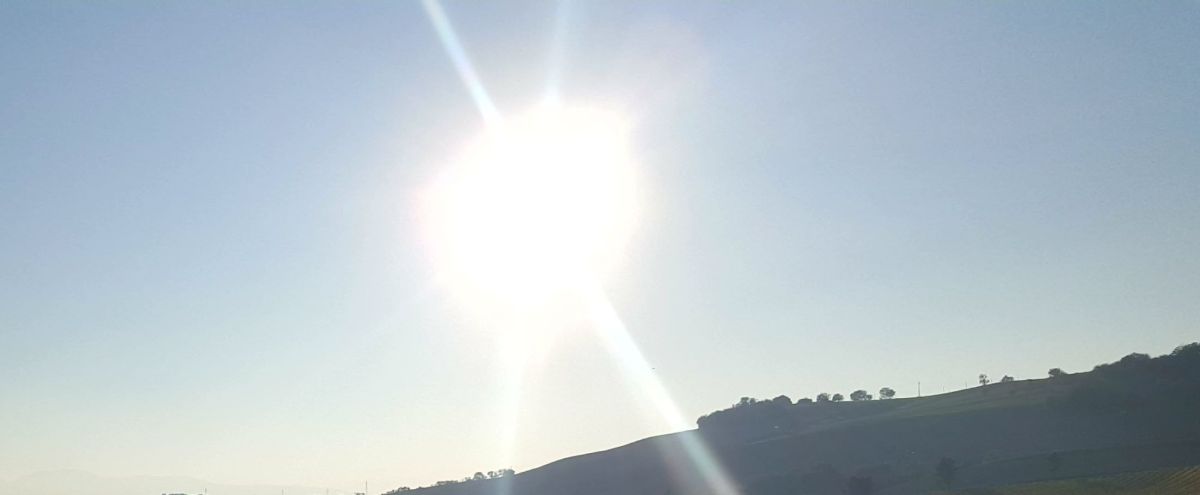
It normally comes in late July, The Heat. But it is already here, a good month early. Normally at this stage of summer, days are hot yet bearable, evenings are warm yet comfortable and nights are cool yet pleasant. With the wheat harvest barely started and the sunflowers only just opening their faces to the sun, though, the temperature here for well over a week now has kept nudging ever further into the upper 30s centigrade and only dropping back to the mid-20s during the sultry nights; in the south, meanwhile, it’s been in the low 40s easing back to the high 30s. And so for the first time ever in June, the opening line of a song that we sang in the acapella choir I used to belong to is already providing the mental background music to all our activities. Made famous by Ladysmith Black Mambazo, “Rain, rain, rain, rain!” celebrates the long-awaited arrival of the rainy season to restore life to the arid, sun-scorched African savannah after months of torrid heat that turns the soil to dust.

“Oh, come, never come,” laments the song. And with each passing day we yearn for the precursory sound and lighting effects that herald the arrival of a crashing thunderstorm which will allow the weather magically to reset itself after days of steadily rising temperatures and ever-increasing humidity. Endless days during which the steamy heat is fierce and relentless, trapped beneath a stifling veil of high cloud that dulls only the sun’s glare but not its strength. In an effort to keep the heat at bay and maintain at least an impression of ‘less hot’ if not exactly ‘cool’, we live in a state of perpetual gloom, keeping windows and shutters closed and curtains drawn throughout the day. But as each sweltering day passes, the heat gradually seeps through the brick and stone and starts to trickle down the walls, gathering in steamy puddles about the house, and over time reduces the gap between outside and inside temperatures to just a few precious degrees. Night time brings at least some respite: now that our swanky new solar-powered air-con unit has supplanted the ceiling fan that in previous years barely managed to stir the thick heavy air into some semblance of a breeze to cool our clammy limbs, our bedroom provides an oasis of blessed, restorative cool. As soon as we rise, though, we are back to wading through those steamy puddles of heat, which seem to be getting deeper and thicker by the day.

“Oh, come to me, beautiful rain,” the song implores. Every day we scan the shimmering horizon for signs of cloud gathering over the Sibillini Mountains where lies the bubbling cauldron of thermals that cast great, pearlescent towers of cumulonimbus cloud up into the baking sky: the surest sign in these parts that a downpour is on its way. But nothing. Just a strangely colourless blanket of heat haze fraying the sky’s furthest edges. And so the mercury remains uncomfortably close to forty degrees for another day, and there are reports on the news about the heatwave and features on how to cope with its effects – for everyone is feeling the heat, not just we pasty, cool-blooded Anglo-Saxons.

It will come eventually, though; it always does. Usually it is in the early evening, by which time the air is so clogged with heat that every movement becomes a sweat-inducing effort. Over the Sibillini’s more northerly peaks the clouds will at last begin to bubble up. Then to gather into great churning clumps, then to coalesce into a roiling mass of grimy grey that quickly extinguishes the sun’s heat. The immediately fresher air will carry the scent of rain and we will both scurry around the house, flinging the windows open, ready to usher the longed-for cool into every muggy corner of the house. A bad-tempered breeze will start to tug at the tops of the trees, drive the cat-flap into a frenzy and set the shutters rattling. And within minutes big, fat, juicy rain drops will begin to splat with an almost audible sizzle onto the sun-baked terrace. Yess!

The drops will rapidly merge into heavy curtains of driving rain that billow and flap in the raging wind. Through the un-shuttered windows in the garden doors we will watch the rain drops bouncing off the rain-slicked tiles. Down the valley, sea and sky will merge into a vast and impenetrable wall of steel grey and within minutes the village will be lost within a swirling cloak of cloud. Thunder will roar as the demons of the Sibillini hurl down spears of lightning that flash silver-white against the now charcoal sky. And for a while it will seem as if the arrival of the four horsemen of the apocalypse is nigh.

Within an hour it will be over, though. The demons will fall silent, gather their weapons and retreat to their mountain lair. The rain will abate and the slackening wind will flush the grey away, revealing a sky of purest pastel blue. Across it will be strewn bold streaks of lavender, pink and purple edged with gold. And as they slowly melt into the horizon, the sun will tentatively emerge once more. The storm will have done its job, though: the temperature will have almost halved and you will be able to almost taste the freshness in the air. So at last we will fling open the doors and windows and shutters, let the evening sunshine spill into every room and invite the playful breeze to blow away the drifts of stale heat that had accumulated in every corner. The re-set will be complete and normal service will be resumed.

But not yet. I stand up from my desk, open the shutters to my study window a chink and peer hopefully at the sky to the west: nothing; just featureless milky blue-grey. I sigh, return to my seat and turn up my desk fan another notch. “Oh, come to me, beautiful rain,” I plead.

Ladysmith Black Mambazo singing ‘Rain, rain, rain, rain!’: https://www.youtube.com/watch?v=iUH7PM0-cpI

Crunching the Numbers

It has been my nightly ritual for over a year now. Every evening, with dinner in the oven and probably with a glass of chilled rosé in my hand, I reach for the iPad and bring up the daily Covid-19 data on the website of Corriere della Sera.  For a long period they made dismal reading, with daily fatalities towards the end of the year nudging 1000 and back where they had been in the height of the first wave, and daily infection rates more than twice as high as back then; on one particularly grim day in November they even hit 40,000.

After the strict Christmas lockdown that followed this horrifying peak, we watched the daily numbers, both new cases and fatalities, fall steadily through January and February. And with this improvement in the numbers, we moved from the red zone to orange and finally to yellow – albeit with the higher thresholds to meet before each transition as well as the night-time curfew that had been put in place by the new Draghi regime. But no sooner had the second wave seemed to have passed than by the end of February, the alpha variant (or ‘variante inglese’ as it was called here at the time) had arrived and very soon I could barely bring myself to look at the daily stats each evening as the curve started to climb rapidly back up again. And sure enough, just as rapidly the country went from yellow back to orange and finally back to red over Easter, shortly before which daily cases had rebounded to 26,000, although the death rate, thankfully, had remained largely stable. 

This time, however, lockdowns, travel restrictions and curfews were no longer the only weapons in the country’s armoury. Despite its agonisingly slow start, the vaccine programme had been steadily building up steam and by April it was clear that it had begun to gain traction. As we moved back from red to orange once more my nightly pre-dinner ritual started to include a check of the daily vaccination numbers on the Health Ministry’s website too: by the end of the month, the injection rate was not far off the government’s objective of half a million jabs a day and the daily infection rate had halved. The third wave, it seemed, had at least been contained if not avoided completely.

It was with considerable national relief, therefore, that restrictions were eased again at the start of May leaving only a handful of regions still in orange and the rest, including Le Marche, back in yellow. The curfew was soon put back from 10pm to 11pm (and subsequently to midnight), bars and restaurants re-opened for outside dining, and for the first time in months we could move freely between regions of the same colour, although for any movement between regions of different colours, you either had to demonstrate a ‘need’ for travel or provide proof you had been vaccinated, had recovered from Covid-19, or had tested negative within the last 48 hours. Moreover, the once almost mythical white zones, ie those with lowest numbers and hence the fewest restrictions, now featured prominently in the latest roadmap for summer. Better still, despite this really quite significant loosening of restrictions, the infection rate continued its steady decline, falling over the course of the month from nearly 13,000 to about 3,000 cases per day, with the daily vaccination rate eventually meeting – and often exceeding – the target of half a million jabs a day. And at the very end of the month, Mr Blue-Shirt and I both received our first dose, several weeks earlier than we had originally anticipated.  My daily pre-dinner stats check had at last became a cause for cheer rather than gloom.

The encouraging data across the country enabled a small number of regions to move from yellow to white at the start of June, meaning a complete lifting of the curfew and the re-opening of almost all cultural, leisure and entertainment facilities, but leaving the requirement for masks, social distancing and capacity restrictions in place. Incidentally and slightly paradoxically, this actually meant a tightening of restrictions on movement for us. While Le Marche and our closest neighbour Umbria were both in yellow, we were able to travel freely over to Spello (because it’s one of our favourite places), Deruta (for some more terracotta planters) and Gubbio (just because). But when Umbria, but not Le Marche, moved into white a couple of weeks ago, we were once again bound by the rules regarding movement between regions of different colours and so would have had to demonstrate a ‘need’ for travel or provide proof of Covid-free status if we had wanted to nip over to Spello for lunch. But as jab rates have continued to climb (on occasion exceeding 700,000 in one day) and infection rates to fall (last week dipping below 1,000 for the first time since last September), more regions have ‘turned white’ each week, with Le Marche due to join them tomorrow, and the whole country set to be in white by the end of the month.

Naturally, the delta variant is something of a spectre at the feast, with the government keeping a very close eye on its worrying spread in the UK and keeping in place the ban on entry from India for the foreseeable future. Consequently, every step forward is circumscribed with caveats, making it clear that this forward motion cannot be considered a one-way street, even though there are currently very few cases of the delta variant nationally and none so far in Le Marche.

This notwithstanding, and with our second vaccine doses just a fortnight away, we are daring to hope that we may soon be able to enjoy La Dolce Vita very much as we have always known it. And almost as an indication of our optimism, we have just finished refurbishing the guest bathroom and guest bedroom (complete with new bed and solar-powered air con). So now all we need are some guests…

Looking Back and Looking Forward

I mentally ran through the list while I was up and down the ladder washing the walls. It’s the dull but necessary part of decorating that I always want to get out of the way as soon as possible so I can crack on with the much more satisfying task of painting. So I was passing the time by trying to remember exactly who had come to stay with us in the two-and-a-half years between my moving in to our place in September 2017 and the start of lockdown in March 2020.

Diane, a dear friend of over twenty years whom we had met in Brunei was first. She travelled over for a weekend visit with Mr Blue-Shirt in those first few weeks when he was still based in the UK until the sale of the forge had gone through, even though we couldn’t offer guests much by way of creature comforts at that point. As I ran a fresh bucket of hot water, I remembered how she didn’t turn a hair at our rudimentary hospitality, and with her customary no-nonsense, get-stuck-in attitude had set about pruning a couple of overgrown trees that were blocking The View.

Then came Nick and Elaine, singing friends from the amazing acapella choir I sang with for over ten years. Their first visit, I worked out as I worked my way over the roughly-plastered and whitewashed wall, was early in the spring after Mr Blue-Shirt had moved in permanently as they had lent a hand with installing the patio doors he had brought over with him. And shortly after that, I calculated, as they will have come at half-term, it must have been David and Jackie’s first visit. Fellow members of the informal Friday night ‘Sundowners Club’ at our local pub in Lincolnshire, both of them are primary school teachers, so they can only come in the school holidays. And when they do, they just need to switch off and relax for a few days.

Working my way down the next section of wall from the apex of the roof and the heavy chestnut beams that run the length of the room, I tried to recall who came next. But it was easier said than done since by that first summer we were properly installed, we had established a rhythm of welcoming another set of visitors every six weeks or so, with some returning several times. Diane came back with James at some point; I think it was in autumn, but I couldn’t be sure. And Nick and Elaine have definitely been over in summer because we went to the beach in Porto San Giorgio with them and then on to the night market in Fermo.

Having reached floor level again, I shifted the ladder over another metre and climbed back up to the rafters to start on the next section of wall, by now just sticking with ‘who’ and no longer bothering with ‘when’. Blacksmithing friends and long-time Italophiles Bill and Melanie came for a few days after we’d been to a major international forging event in Tuscany. That must have been in September 2019, I worked out, as it’s a biennial event and we last went on my final overland trip over when I stayed put and Mr Blue-Shirt went back to finish packing up the house and workshop.   

Simon, the very old friend who actually introduced the two of us back in the ‘80s, and his partner Tania spent a good couple of weeks with us as some point. They’re based in the US and made quite a trip of it, taking in Florence and Lake Trasimeno in Umbria while they were with us too. That can’t have been in the height of summer, I decided, because even though it was still warm enough to dine outside in the evening, they relished the relative cool that was a welcome relief from the blistering heat of Arizona where they live.

It was in another May half-term that we had also welcomed Ginny and Pete, very old friends from our days in Germany. Pete had been Mr Blue-Shirt’s right-hand man and room-mate throughout two six-month tours in the Balkans, during which I spent a lot of time with Ginny and two of her teaching colleagues at the forces school where they all taught, who also became great pals. We hadn’t seen them for ages, so their stay was characterised by very long lunches and even longer dinners as we had so much catching up to do, but the weather had been untypically wet during their stay, only to revert to brilliant sunshine almost as soon as their flight back to the UK took off.

I’d got to floor level again, and as I shifted the ladder one last time and ran my final bucket of water, I struggled in vain to remember when Nick and Elaine had been over again: had it been once or twice more? I know they had helped with pruning the olive trees one time, and also with lopping the over-tall willow tree I can see from my study window, but was that the same trip? And then there’d been the time Nick had helped Mr Blue-Shirt erect the first section of pergolato along the south terrace; I had no idea which trip that had been. Nor could I recall exactly when David and Jackie had been over again, but I was reasonably sure it was autumn 2019.

I remembered exactly when our next visitors, Mr Blue-Shirt’s younger brother had come over with his wife and two teenage children, however. It was only two or three weeks after their mother’s death that October, but both brothers decided that they wanted the trip to go ahead as planned, and so almost certainly filled some unexpressed need for one another’s company at that painful time. Despite the underlying sadness, it was a wonderful few days together that were somehow made all the more precious when, tragically, barely a month later their father died too.

I rinsed out the bucket and sponge and flung open the windows to let the summer breeze dry the freshly washed wall more quickly. And as I went to fetch the paintbrushes, rollers and paint from the shed, it dawned on me that Mr Blue-Shirt’s family had in fact been our last visitors. By Christmas we had needed just to hunker down and be on our own together at home, but no sooner had our spirits started to lift and our energy to return than coronavirus began its deadly sprint around the globe. So with much of the world in and out of lockdown for the next fifteen months, David and Jackie had to cancel the flights for what had effectively become their regular spring half-term break, Nick and Elaine’s proposed visit for her birthday in May was reluctantly put on ice for the foreseeable future, and all the other visits that friends and family had been planning were one by one rescheduled for ‘when this is all over’. And so for twenty months our guest room has remained lifeless and empty and reduced to little more than a sanctuary for spiders.

But with infection rates now tumbling, vaccination rates surging and travel restrictions finally beginning to loosen (across Europe, at least), a glimmer of light at the end of the tunnel is just becoming visible. So we are daring to hope that it will not be long until friends and family can once again come to stay. And once I have finished that painting I’ve been looking forward to, we will have a freshly-decorated (and spider-free) bedroom to offer them.

All names have been changed for reasons of privacy.

Light at the End of the Tunnel?

The vaccinations update from the regional health authority popped up on my news feed late one Thursday evening in May. At 12.00 that Saturday morning bookings would be opening for those aged 50 to 59 – sooner than either Mr Blue-Shirt or I had thought they would get to our age-group, even though the vaccine programme had really been accelerating in recent weeks. Of course, simply being able to book our slots from Saturday was no indication of when those slots would actually be, but we both agreed it was still worth making our appointments as soon as we possibly could.

And sure enough, two days later at just before midday, Mr Blue-Shirt was sitting at his laptop with the Le Marche page of the Ministry of Health website on his screen and me peering over his left shoulder. The moment the clock in bottom right-hand corner of his screen slid from 11:59 to 12:00 he clicked on the big ‘book now’ button – and our hearts sank as a booking form immediately opened on a new tab. This being Italy, we assumed that we were about to be asked for every conceivable piece of personal information in order to secure our appointments, right down to pet’s maiden name and mother-in-law’s inside leg measurement. I pulled up a chair and sat down beside Mr Blue-Shirt: this could take some time.

As we started to scroll down to see what information was required, however, it quickly became clear that all we each needed to provide was name, date of birth, health service number, postcode and mobile phone number – and that was it! After a few seconds’ spooling – an indication of how many people were trying to do the same as us, we guessed – the screen changed to a calendar for our nearest vaccine centre, which happened to be about ten kilometres away on the trading estate just outside Macerata that Mr Blue-Shirt knows like the back of his hand. Even though it was barely five minutes since bookings had opened, the earliest available dates were already two weeks away. No matter: Mr Blue-Shirt immediately clicked on the earliest available slot, hit ‘next’ and instantly received a text message with a single-use verification code that he needed to enter on the ‘confirm booking’ screen that had already appeared. And as soon as he had entered the six-digit code, a confirmation message appeared on the screen (simultaneously accompanied by a text confirmation), along with a set of PDFs to download, including a booking confirmation, a consent form, a health questionnaire, medical information on the four different types of vaccine in use in Italy, and information on data protection.

“I think slots are going really fast, so let’s leave those for now and crack on with booking my appointment,” I said.
“Good idea. We can print everything once both appointments are confirmed,” said Mr Blue-Shirt as he clicked on the ‘book now’ button again. We quickly went through the same process with my details and within minutes, I had my appointment booked at the same time at the same vaccine centre, but 24 hours later than Mr Blue-Shirt’s: slots were definitely going fast. But we were in.

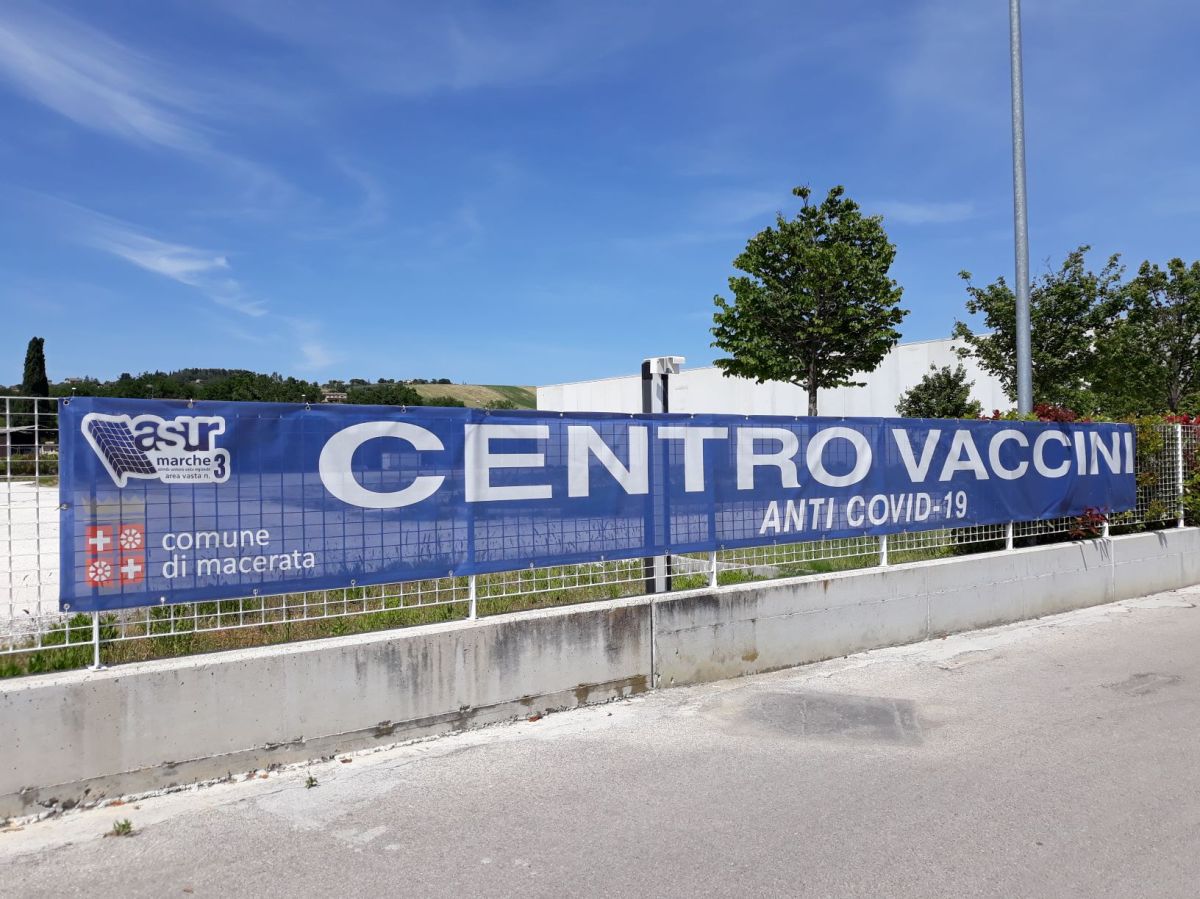
So a fortnight later we made two trips down to the trading estate – for Mr Blue-Shirt’s slot on Saturday and mine on Sunday – and followed the huge, bright yellow signs to the vaccine centre, which turned out to be a large vacant office building with lots of parking, arriving bang on time at 3.00pm. Comparing notes over the ice-cream Mr Blue-Shirt had promised me after I’d had my jab, it was clear that my experience had been almost identical to his…

Leaving Mr Blue-Shirt in the car with his book, I followed the arrows across the car park to the entrance, sanitised my hands, had my temperature read (35.9°C) and handed my paperwork to one of the team of Protezione Civile volunteers seated behind Perspex screens at the reception desk. The masked volunteer swiftly ticked my name off the list, gave me two more short forms to fill in and directed me through to a large, light-filled room about the size of a gymnasium to have my documents checked by one of the six or so doctors seated at Perspex-screen-topped desks lined up along one wall. There was little conversation to be heard other than the muffled exchanges between doctors and patients, but the mood was one of purposeful calm. I took the numbered ticket handed to me by another Protezione Civile volunteer, sat down on one of the few empty chairs that were set out in widely spaced rows facing the bank of doctors and filled in the new forms, which were no more than variations on the consent form I’d already filled in. By the time I had completed them, my ticket number had already appeared on the screen so I hastily bundled my papers together, went to the desk indicated and slid them under the Perspex screen to a young doctor with a tumble of black curls and heavy-framed glasses. He checked I’d signed everything in the right place and quickly went through my medical questionnaire, slowing down only to check my answers to the questions relating to allergies (none) and Covid-19 history (none). Satisfied with my responses, he scribbled ‘Pfizer’ in the relevant spaces on the forms, signed and stamped them, posted them back beneath the Perspex screen, directed me to the line of arrows across the floor that led out to a corridor and, as I stood up, called out the next number on the display screen – doubtless for the umpteenth time that day.

In the corridor, yet another Protezione Civile volunteer asked which jab I was having and then directed me to the queue for the relevant bank of temporary cubicles that had been erected down each side. Within no more than two minutes, I was shepherded into the first cubicle where a nurse invited me to take a seat and took my paperwork from me while another was already drawing up a syringe. It was all done with such practised ease that I barely had time to ask her to use my right arm as I’m left-handed. Once we had each turned right side to right side, I offered my arm, she inserted the needle, I felt a sharp ache as she pressed the plunger in, then the soothing cool of an antiseptic swab, and finally the childlike comfort of a gently-applied plaster. “A posto!” declared the nurse, tossing the used needle into the sharps bin. “That’s it!” Her colleague signed and returned my paperwork, ushered me out and instructed me to take a ticket from the dispenser at the end of the line of cubicles and wait to book an appointment for my second dose, reminding me not to leave for a full fifteen minutes in case I had an adverse reaction.

I sat down in the sunny waiting room where about five more Protezione Civile volunteers were handling the booking process. Even though there were about twenty people ahead of me, it was clear they were still getting through people very rapidly, and in the end, I only waited about five minutes until my number appeared on the screen. The volunteer scanned my health service card, took my 1st dose paperwork from me, swapped it for the paperwork for my 2nd dose, for which she gave me a date just over a month later, and finally printed out two QR code stickers, one with details my 1st dose, and one with details of my appointment for my 2nd. And by the time we were done – less than half an hour since I had entered the building – I still had five minutes to go before I could leave and head back to the café in the village for that ice-cream Mr Blue-Shirt had promised me.

That weekend, 1,076,928 jabs were administered in Italy. Mr Blue-Shirt and I were extremely pleased to be part of the fantastic national effort that meant that two of them were ours.

Getting to Know the Neighbours

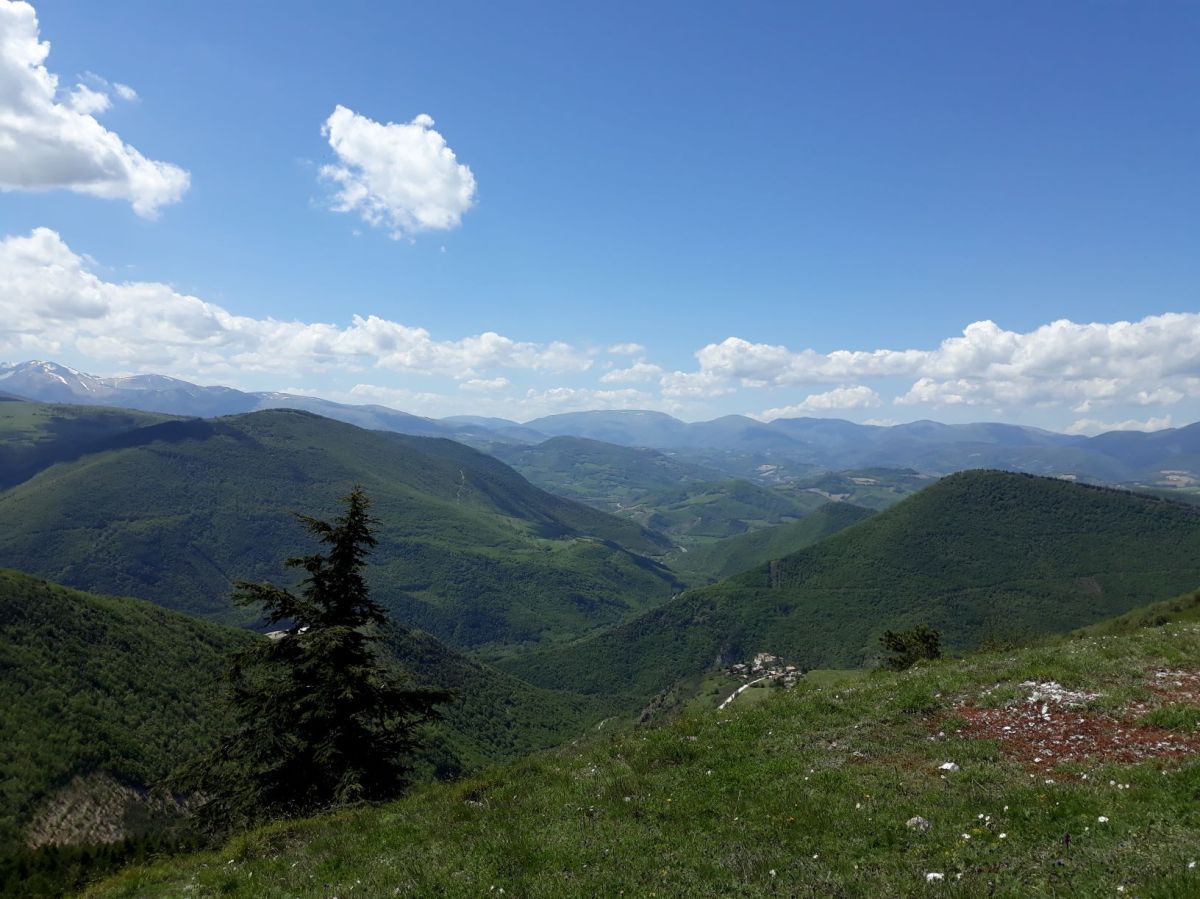
We see them every time we pass along the ridge that forms the start to any trip from our place over into Umbria, down towards the coast or even to the supermarket, as well as when we go for a run or for a cycle. To the left is a wide-angle version of the view from our bedroom and sitting room windows – the broad, olive- and vine-striped valley sweeping down to the enticing triangle of turquoise sea below. To the right, meanwhile, a vast patchwork of tree-edged fields filled with wheat or maize or sunflowers extends across the Chienti valley to the west and then rises steeply up towards the mighty Sibillini Mountains whose roughly-hewn limestone peaks stand in stark relief against the cornflower blue sky. But no matter how familiar their arresting beauty has become, we have always found their majesty slightly intimidating and unapproachable.

Mysterious and moody, there are no two days they look the same. On occasion, they take on a ghostly aspect in the early morning haze when the only hint of their presence is the sun reflecting off their craggy flanks. And from time to time, they disappear completely, retreating into a pale shroud of mist, or hiding behind a swirling cloak of steel grey cloud – as sure a sign of a change in the weather as any barometer. But more often than not, they stand proud and aloof, basking in the golden sunlight, their upper slopes still clad with snow until well into spring.

This imposing collection of some twenty peaks that rise to almost three thousand metres is part of the Apennine chain, the rocky backbone of Italy. They have been a fully-fledged National Park since 1993 and offer hikers and cyclists miles of trails and dozens of rifugi providing comfy beds and hearty local food at the end of a day spent exploring the park’s abundant flora and fauna, waterfalls and gorges, abbeys and monasteries.  They are home to mountain goats and deer, wolves and wild cats, falcons and eagles, and, according to the Italian Tourist Board, are also a ‘realm of demons, necromancers and fairies’.

Indeed, for centuries they have been associated with magic and the occult thanks to the legend of Sibyl. It is claimed that this mystic prophetess and witch was enraged to find that not she but Mary would become the mother of God. Her rage provoked God to order her to dwell with devils until Judgement Day in a cave beneath one of the range’s highest peaks, which naturally came to be known as Mount Sibyl (Monte Sibilla). And when storms brew, it is not difficult to understand why dark forces were believed to reign there. The rumbling thunder and churning cloud could easily be Sibyl and her demons venting their displeasure as they hurl spears of lightning and sheets of beating rain onto the verdant lowland pastures.

Then, when the storm has passed, its anger spent, the Sibillini’s jagged peaks appear like islands floating on a milky sea of mist. More often, though, they re-emerge in all their splendour against a crystalline sky, serene yet stark. Flushed with rosy-pink at dawn, and clothed in a palette of greys and greens beneath the midday glare, they fade to heather-purple as the sun slowly sinks behind them, and finally darken to charcoal silhouettes as the dying embers of the day cast flares of crimson and scarlet across an orange sky.

It is a menacing beauty, however. For it is a matter of neither myth nor legend that deep below their forbidding slopes seismic forces periodically shift and stir. Directly beneath the range’s highest peak runs the infamous Monte Vettore fault, and when it last ruptured in 2016, it unleashed an earthquake that devastated communities throughout the mountains and affected towns across the region. And although many buildings retain the scars of the damage they suffered, and not everyone has returned to their homes, the Marchigiani are a stoical and resilient people and life in and around the mountains got back to near-normal remarkably quickly. So despite the menace lurking within, the Sibillini also somehow symbolise of the triumph of optimism over adversity.

And now that we have broken the ice a little with our hikes among their rugged peaks, we are finally coming to experience for ourselves that there is more to our imposing neighbours than meets they eye. In fact, we are even beginning to discover the mountains’ slightly softer side, with their shady woods filled with birdsong, limpid pools over which jewel-coloured dragonflies skim, and lush pastures that at this time of year are covered with a multi-coloured carpet of wild flowers among which butterflies bob and bees buzz.

So now when we head off to the shops or the beach, the Sibillini’s majesty feels much more benign and welcoming – although never to be taken for granted.

A Hike in the Hills – Part 2

“About bloody time! What kept you?” Accompanied by wolf-whistles and a round of mock applause, this was the greeting we received from the other half of the walking group, who, boots laced and backpacks on, were already milling around at the bottom of a steep stony track leading up into the forest on the edge of the abandoned village of Borgianello. It was just coming up to 9.00am on a dazzlingly sunny Sunday morning and Mr Blue-Shirt and I had finally arrived along with our half of the group at this tiny settlement perched on a bluff high above the Chienti valley in the hills at the northern edge of the Monti Sibillini National Park. We had just survived the hair-raising journey to our destination, involving a geographically challenged event organiser, missed exits, wrong turnings and a death-defying U-turn on a motorway slip-road and could actually have done with a few minutes for our blood pressure to return to normal levels. However, since our early-morning episode of Wacky Races had kept everyone else waiting for long enough, we latecomers pulled on our boots, stowed our water bottles in our backpacks and trotted over to the start of the track where Corrado, our guide for the morning, had already started listing some of the plants and flowers we were likely to see on our walk.   

The half-day hike we were about to set out on was organised by the regional branch of a national environmental group called L’Umana Dimora that, primarily by means of such walks, focuses on the relationship between humankind and nature. And having just been released from another period in lockdown, restoring our own relationship with humankind and nature by striding through the Apennine hills in the height of spring with a bunch of other walkers seemed just the ticket. So, as Corrado, who was lean, tanned and erect despite clearly being well into his seventies, strode off up the hill, we were in fact quite happy to get underway.

Every fifty metres or so, though, he halted briefly and poked about in the undergrowth with his walking pole to point out a rare plant or flower. I’m ashamed to say that much of this was lost on us as we didn’t know their names in English, never mind in Italian. So we continued our ascent of the track, keen to get our muscles moving and our lungs working. But of course, we kept having to stop every time the track split off into the shady woods and wait for everyone else to catch up as only Corrado knew the route we were going to be taking. Initially we found this stop-start rhythm slightly frustrating, but we soon attuned ourselves to the slower pace and chose to make the most of the pauses by admiring the spectacular views glimpsed through the trees, drinking in the scent of blossom and the sound of birdsong swirling around us on the gentle breeze, or exchanging pleasantries with our fellow walkers.  This was all supposed to be about humankind and nature, after all.

The lung-busting climb up through the dense woods brought us out pretty much above the tree line onto an area of undulating heathland that extended into the distance. The track now gently guided us up through poppy-filled meadows and around grassy hillocks dotted with clumps of wild broom freshly sprinkled with bright yellow blossom. Every now and then we would come across someone hunched over the verge, searching for the wild asparagus, with its long slim stems and fine purple tips, which at this time of year grows in abundance within the tussocks of tall grass. But after a while, it was just us and the heathland, sunlight dancing off the long, lush grass rippling green and gold in the stiffening breeze.  

On and up we went. And the higher we got, the more the views opened up. Rounding one bend, the hillside suddenly dropped away to the right, presenting us with far-reaching views across a mosaic of green, yellow, gold and beige and on to the towns of Tolentino and Macerata to the north, while along the eastern horizon lay the deep turquoise smudge of the distant Adriatic, and all of it topped with a sky of unbroken cerulean blue. Then after another long, steady climb, as we crested a hill topped with a single wind-sculpted tree, the northern peaks of the Sibillini reared up to our left: a mighty phalanx of steep, thickly forested slopes whose craggy tops were still smeared with the last traces of snow. As we just stood and drank in their silent splendour, Corrado went along the line from left to right, naming every single peak as if introducing us to a group of his friends at a party. But like all such introductions, I’m sorry to say, the names were forgotten almost as soon as they were heard.

It was the same story a kilometre or so later as we approached the highest section of heathland on the walk, which as far as the eye could see was carpeted in a mass of pink, yellow, red, purple, white, blue, cream and crimson. As we strode towards the summit, Corrado reeled off every single one of their names, most of which, though, were lost on the swirling breeze blowing in from the mountains. That said, even I was able to identify huge, waxy buttercups, smiley marguerites, tiny, pale yellow orchids and startling blue gentian (I think) as well as wild lavender, thyme and rosemary.

Some time earlier, Corrado had decided not to complete the loop he had originally planned as it might have been too challenging for some members of the group, three or four of whom had already turned back before the final set of hills. So once we had finished taking photographs of the flowers, taking in the magnificent 360-degree views, and helping each other to identify distant towns or sparkling ribbons of river, he guided us back down the far side of the hill, traversed its lower slopes and then brought us along a narrow, stony track back up to meet the main path we had left an hour or more earlier. 

From here, it was a matter of retracing our steps back over the heath, across which were now racing patches of shade cast by the pillows of pearlescent cloud that had started to float up from behind the mountains. Then it was back down past where the asparagus pickers had long since finished their foraging, back through the poppy fields and on towards the top of the woods. With everyone safely accounted for, we began the long knee-jarring descent back towards the road, all of us glad to be in the shade provided by the canopy of oak and beech now that the sun was at its hottest.

Despite a few slithers and stumbles on the rocky path, we all arrived back at the cars in one piece, albeit rather dusty, sticky and windswept, and more than ready for our picnic lunches. As Mr Blue-shirt and I munched on our hearty cheese and ham rolls, we agreed that the walk had definitely been worth the effort – even if it had got off to a somewhat shaky start. We had been somewhere we would never have found on our own, had enjoyed sights and sounds we wouldn’t otherwise have experienced, and had spent the morning in very convivial company. So as we threw our boots and backpacks into the car, we asked the organiser to make sure he sent us details of the next walk…

A Hike in the Hills – Part 1

As soon as we had returned to the yellow zone at the start of the week, we had been keen to make the most of our newly-restored freedoms. And by Thursday we looked set to achieve a hat-trick: we had just finished our first breakfast on the terrace of the café in the village for weeks, we were about set off to Umbria on our first trip outside Le Marche in seven months, and as Mr Blue-Shirt was settling the bill for our coffee and croissants, my eye fell on a poster stuck on the café door that offered us the opportunity to ‘participate in an outdoor physical activity together with other people’.

The tightly printed A3 sheet set out the programme for a half-day guided hike that Sunday in the hills just to the north of the Monti Sibillini National Park – complete with breakfast stop and pre-ordered picnic lunch plus a visit to a remote church on the way back to see a major 15th century religious artwork. It was organised by the regional branch of a national environmental group called L’Umana Dimora that, primarily by means of such walks, focuses on the relationship between humankind and nature.

Now, while our house is powered by solar energy and we are even toying with the idea of buying an electric car, we can’t, hand on heart, claim that it was the environmental angle that caught our attention particularly. But having spent much time at home on our own over the preceding weeks and months, restoring our own relationship with humankind and nature by spending a morning striding through the Apennine hills in the height of spring with a bunch of other walkers sounded very attractive indeed. So I took a quick photo of the poster and when we got back from Umbria, I exchanged a couple of emails with the organiser, booked our places and ordered our picnics, and on Saturday evening dug out our walking boots and backpacks ready for the next day’s 7.30am start.

Old habits die hard and Mr Blue-Shirt still can’t shake his military ‘five minutes before’ custom, so at precisely 7.25am on Sunday morning we pulled onto the deserted car park outside the pharmacy on the edge of Macerata that was our designated meeting point, a little unsure what and who to expect, and when. But on the dot of 7.30am, a gaggle of cars converged on the car park. The organiser, an incongruously rotund chap called Primo, did a brief head-count of the dozen or so people milling about in walking gear and masks and exchanging elbow bumps in the early morning sunshine. As soon as he was confident we were all present and correct, with a cheery “Andiamo!– “Let’s go!” he invited us all to return to our cars and head off to our breakfast stop at the services a few kilometres inland along the dual carriageway, and by 7.35am the car park was empty again.

As Primo handed out our picnic bags over breakfast at the stand-up tables on the terrace of the service station, we discreetly checked out our fellow walkers. We were mildly relieved to find that they were all pretty much the same vintage as us, and that, like us, they were certainly dressed for hiking, but not a route march. So, pleased that we didn’t stick out too much like sore thumbs (other than being the only English participants, of course), we tentatively struck up conversation with a couple of people and discovered that most didn’t really know each other, but had only met once or twice on previous walks, which we also learnt took place every fortnight or so – all of which we found quite promising as trying to break into a long-established, close-knit group would be more of a challenge.

With everyone fed and watered we once again all jumped back in our cars bang on schedule, following Primo’s instruction to keep an eye on the battered 4×4 Fiat Panda driven by Corrado, our guide for the day. Only Corrado shot off so quickly that he was already out of sight by the time we were able to join the convoy, so we took the next best option and slotted in behind Primo who had set off along the dual carriageway at a slightly more sedate pace in his ancient Ford Focus. We began to doubt the wisdom of this some minutes later, however, as we sailed past the exit that sign-posted the village closest to the start-point of the walk. Fair enough, we thought: local knowledge, perhaps. But as some vigorous arm-waving broke out between driver and passenger in the Ford Focus, it became clear that Primo had missed the turning – along with the other half dozen or so cars behind him.

No matter, we thought: we could all take the next exit, re-join the dual carriageway going the other way and leave at the correct exit from the opposite direction. And sure enough, barely two kilometres further on, we all followed Primo off the dual carriageway. But, still gesticulating wildly at his passenger, he ended up bouncing along a gravel track away from the dual carriageway, and although we were briefly prepared to give him the benefit of the doubt, he soon slowed to a crawl, and then executed an ungainly about-turn in the driveway of a disused cement works. So one after another, we all duly executed a similar multi-point turn and followed Primo back to the main road.

We had little choice but to stick with him as we had no idea exactly where the walk was supposed to start, so despite our bafflement, but still pinning our hopes on local knowledge, we stayed on his tail as he headed off up the slip road to the dual carriageway – on the same side as we had all just come off – only for him to slam on the brakes halfway up, and the line of cars behind him to miss concertina-ing into one another by a whisker. Primo’s increasingly exasperated passenger leap out, his extravagant body-language leaving little doubt as to the thrust of their latest exchange:
“What the hell do you think you’re doing?! You’re on the wrong bloody side!”
“But you said get back on the dual carriageway!”
“Yes – going back the other way, you stupid idiot! It’s miles to the next exit!”
“Don’t blame me! It was your crap directions! I’ll turn around…”
“What? You can’t turn around here! It’s a bloody slip road!”
“I haven’t got much choice, have I! Just get everyone to follow me.”
“For f…. sake….!”

So as Primo performed his heart-stopping U-turn, his co-pilot took his life in his hands and stood in the middle of the downward side of the slip-road to warn drivers taking that exit of the obstacle ahead, while simultaneously frantically directing the rest of us to follow Primo’s lead.
“Jesus!” exclaimed Mr Blue-Shirt as he executed the fastest U-turn on record. “I don’t believe we’re doing this!”
“How that guy hasn’t got taken out on the slip road I do not know. Thank God there’s so little traffic at this time,” I said weakly, clinging onto the dashboard as we spun through 180 degrees.

Once safely off the slip-road and finally facing in the right direction, the convoy pulled over to catch its collective breath – and to allow another driver who actually did know the way to our destination to take over from Primo as lead vehicle. Having fallen in behind the dark blue Fiat 500 with Primo now relegated to tail-end Charlie, we were on our way again in a couple of minutes – not onto the dual carriageway as expected, but, after yet another dodgy U-turn across a petrol station forecourt, along the minor road that ran parallel to it – and going in what at least felt like the right direction. And sure enough, within a couple of kilometres, we began to climb out of the valley up into the steep, forest-clad hills, at last following signposts to the village we were supposed to have been heading towards before everything had descended into a real-life version of Wacky Races.

Little over ten minutes later we finally arrived at our destination at the bottom of a steep stony track leading up into the forest on the far side of the tiny village of Borgianello, perched on a bluff high above the Chienti valley. The other half of the group who had followed Corrado straight there were standing around, boots laced and backpacks on as we finally hove into view to a round of mock applause and multiple calls along the lines of “About bloody time! What kept you?”

While they were all understandably impatient to get going, after our white-knuckle ride just to get there, we could have done with a bit of a rest first – even though it was not yet 9.00am and we had yet to walk a single step…

Journey to Freedom

“So when was it, then?” said Mr Blue-Shirt through a mouthful of croissant. “I thought it was when we were back in yellow after the Christmas lockdown.”
“No, that was when we had those really good homemade fish burgers down in Civitanova the first weekend things re-opened in January,” I said between sips of cappuccino. “It was ages before that.”
We were enjoying breakfast in the spring sunshine on the terrace of the bustling café down in Trodica.  We always pass it on our way to do our weekly shop, and after so many weeks with its shutters closed and its chairs and tables stacked up under tarpaulin, it was great to see it buzzing with life again. For at the start of the week we had returned to a new-look yellow zone, meaning cafés and restaurants were permitted to offer daytime outdoor table service at last.

 “Oh, yes. And it was just before the thirty-kilometre limit came in when we took the cross-country route to San Benedetto del Tronto for lunch at that terrific but unlikely looking place behind the port.”
“…. And the route was so windy I was beginning to get car sick. We ended up using the autostrada for the last bit, remember?”
“That’s right. So it must have been before Christmas, then, that we went to that little bar in Servigliano where we used to go with Pam.”
“Yes, definitely: there was a Christmas tree in the middle of the square.”
With this new-look yellow zone had also come the lifting of restrictions on movement between regions and so we were trying to work out exactly how long it had been since we had last left Le Marche.

“But restrictions had already tightened again well before that trip to Servigliano because all our teaching went back online in October and that’s when movement between regions was stopped again, wasn’t it?”
“I think so. In which case, it must have been……” Mr Blue-Shirt chased the remaining croissant crumbs around his plate with a moistened index finger as he mentally counted back through the different periods and levels of lockdown “… September!”.
“Yes, that’s it! We nipped over into Umbria shortly after our holiday and before the infection rate started to climb again…”
“… and it was still quite warm so we had lunch in Spello on the terrace of that place with the fabulous views across the plain to Assisi.”
“ God, so that’s over seven months! I hadn’t realised it had been that long!”

The café in Trodica sits just off the roundabout where we join the east-west dual carriageway that runs inland from the coast at Civitanova Marche, and as soon as we had finished our breakfast we were going to turn right instead of left at that roundabout and head off west, and – for the first time in seven months, as we had just established – cross over from Le Marche into Umbria. For we had decided that we should celebrate our new freedom to travel with another trip to Spello which, as well as being one of the closest places for us to visit outside Le Marche, is (in normal times) one of our favourite day-trip-able destinations.

This almost implausibly picturesque, small medieval hill-top town with its narrow, flower-filled lanes and shady squares lined with small shops, restaurants and galleries is barely 100 kilometres away and little over an hour door to door, but going to Spello always somehow feels much more than it is. I suspect this is largely thanks to the journey, which involves crossing from the eastern, Marchigian side of the Sibillini Mountains to the western, Umbrian side. Up until five or six years ago, the dual carriageway ran out just before it reached the mountains, making and the onward route up and over into Umbria long, tortuous and not suited to anyone in a hurry. While undeniably pretty, the road, with only one lane in each direction, wound through steep-sided valleys offering an occasional glimpse of distant snow-capped peaks, zig-zagged up and down forest-clad slopes and passed through a succession of tiny villages strung out along each side of the road. But not long after we started coming to Le Marche, long sections of extensive roadworks started to appear along the route and over time it became clear that the old road was not only going to be upgraded, but ultimately replaced with a swanky new dual carriageway that would run all the way from Perugia to the Adriatic coast. And rather than meandering along the valleys and over the hills, it would pass, swift and straight as an arrow, right through the mountains by means of a long series of impressive tunnels.

With each successive holiday-cum-house-hunting-trip we took in the area, another section of dual carriageway would be completed or another tunnel finished, but because it was not feasible for traffic to switch from old to new and back again, the new road remained just a tantalising hint of the speed and efficiency to come until every last section of tarmac had been laid, every last stretch of crash barrier erected, every last white line painted and every tunnel light switched on that it finally opened for use. All this delayed gratification only increased the sense of anticipation so that when we did finally slip seamlessly from the old dual carriageway and onto the new one, it felt as if we had joined some high-speed super-highway to another world. All of a sudden, we were effortlessly sailing past the tiny villages that we used to snake through, sometimes at little more than walking pace. Then as we gained altitude, we found ourselves plunging into and bursting back out of tunnel after tunnel, some little longer than a wide bridge, others extending for three or four kilometres. The short sections of open road in between gave little indication of exactly where we were at any given point, with only the steady upward climb followed by the steeper descent providing a reminder of the nature of the journey, until we emerged from the final tunnel and the road began to swing round in a broad arc, as if bringing us in to land at our destination down on the narrow Umbrian plain.

And when were at last able to repeat that journey last week, the sense of anticipation and other-worldliness we experienced all over again was eclipsed only by the long-overdue pleasure of simply being somewhere else.